Fall in Southern California doesn’t always look like fall in the rest of the country. One afternoon might feel like summer, while the next morning brings chilly temperatures, coastal moisture, or the first seasonal rain.
For homeowners in Los Angeles, Orange County, Riverside, and San Bernardino, these changing conditions create a unique challenge: keeping indoor temperatures comfortable without wasting energy or putting unnecessary strain on the HVAC system.
The good news? A few simple steps can help you prepare your home for cooler weather, improve indoor comfort, and potentially avoid expensive surprises.
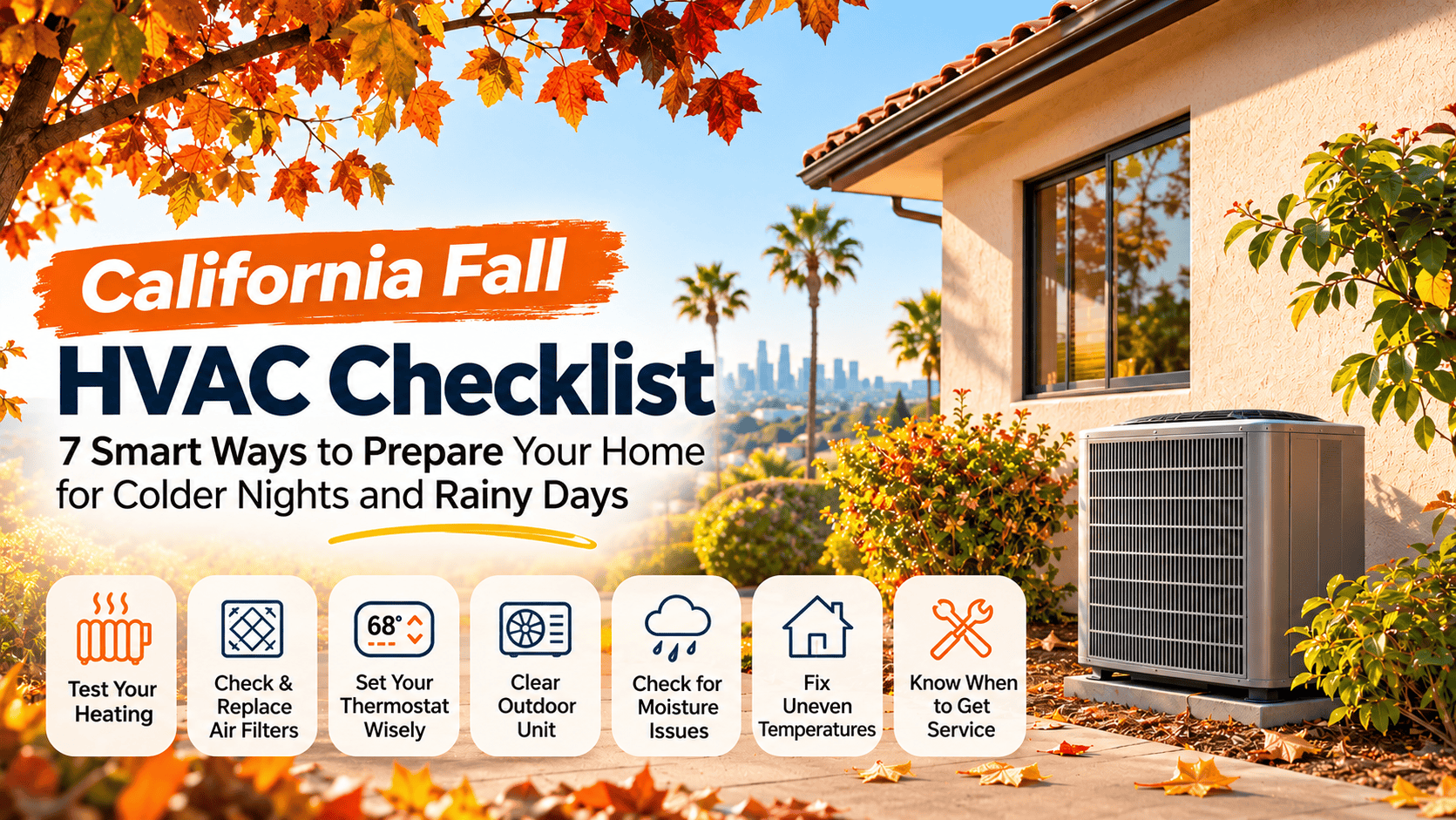
Here are seven practical things every Southern California homeowner should know this fall.
1. Don’t Wait Until the First Cold Night to Test Your Heating
Many California homeowners leave their heating systems untouched for months. When temperatures finally drop, they turn on the heat only to discover that something isn’t working.
Before colder nights arrive, switch your thermostat to heating mode and let the system run long enough to confirm that warm air is reaching the rooms.
Pay attention to unusual noises, weak airflow, unexpected shutdowns, and burning smells that persist after startup.
A brief dusty smell can occur when a heating system runs for the first time in months. However, a strong or persistent burning smell should never be ignored.
Homeowner tip: If your heating system fails to start, don’t repeatedly reset it. A professional diagnosis can help identify the problem without risking additional damage.
2. Check Your Air Filter After California’s Dusty Season
Southern California homes face a combination of dust, traffic pollution, pollen, and, during certain periods, wildfire smoke.
Your HVAC air filter helps capture airborne particles as air circulates through the system. But when the filter becomes clogged, airflow can decrease and the equipment may have to work harder.
Check your filter monthly and replace it according to its condition, the manufacturer’s recommendations, and your household’s needs.
Homes with pets, heavy dust exposure, or frequent HVAC use may require more frequent replacements.
Homeowner tip: Choose a filter compatible with your HVAC system. A higher filtration rating isn’t automatically better if it creates excessive airflow resistance.
3. Use Your Thermostat Strategically During Temperature Swings
One of the biggest fall HVAC challenges in California is the difference between daytime and nighttime temperatures.
Your home might need cooling in the afternoon and heating after sunset.
Instead of constantly changing thermostat settings, establish a comfortable temperature schedule that matches your household’s routine.
For example, when heating your home, the U.S. Department of Energy recommends starting around 68–70°F while awake and adjusting downward when sleeping or away, when appropriate.
For heat pumps, large automatic temperature setbacks may not always be the most efficient choice, depending on the system and thermostat.
Homeowner tip: If your thermostat is outdated or unreliable, consider upgrading to a compatible programmable or smart thermostat.
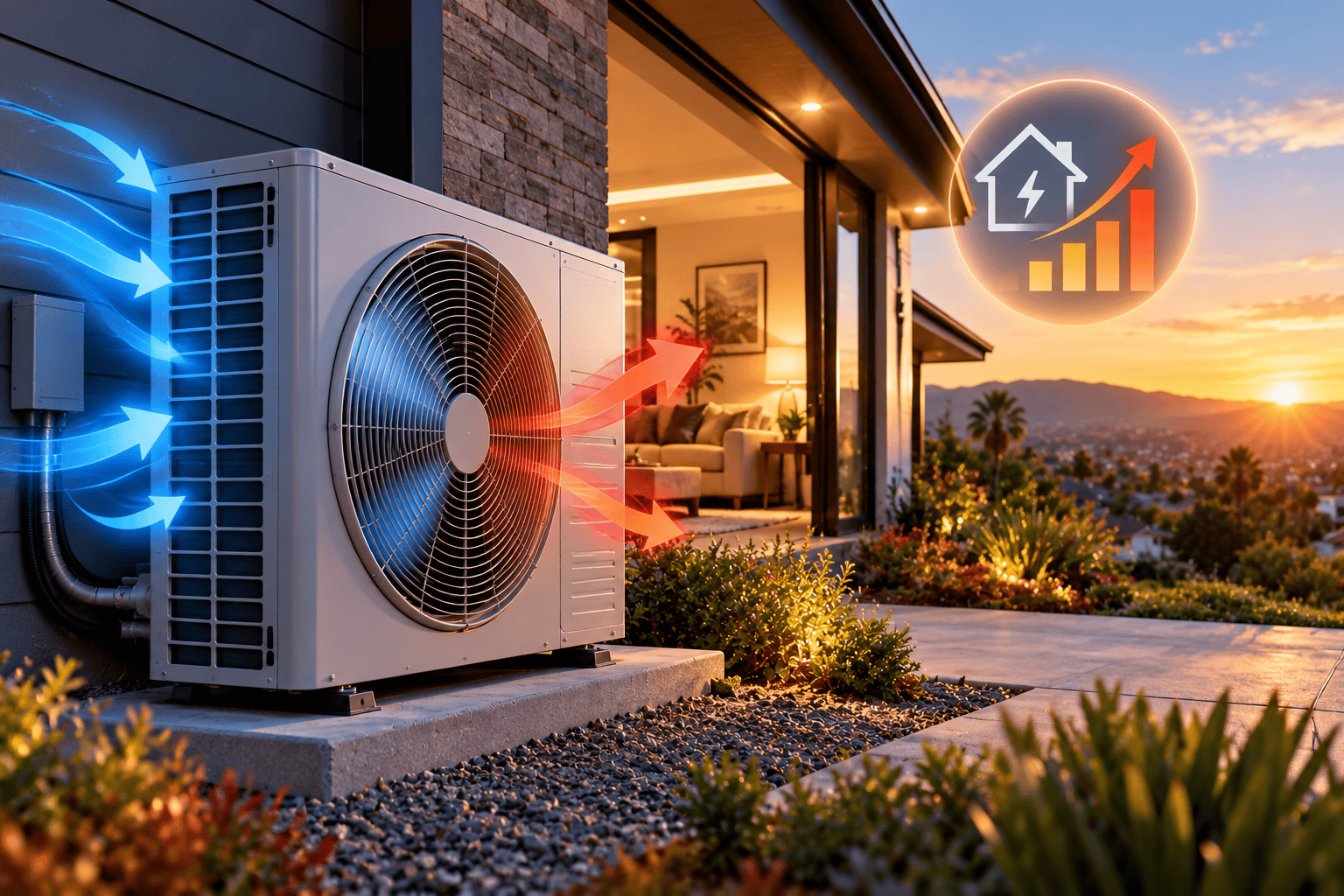
4. Prepare Your Outdoor AC or Heat Pump Unit for Fall Debris
Autumn leaves, dirt, and landscaping debris can collect around outdoor HVAC equipment.
Even in areas with mild winters, blocked airflow can affect system performance.
Walk around your outdoor unit and check for leaves, vegetation, or objects restricting airflow. Keep the surrounding area clear according to the manufacturer’s instructions.
Avoid spraying electrical components or opening equipment panels.
If your home uses a heat pump, remember that the outdoor unit may continue operating throughout the winter because it provides both heating and cooling.
Homeowner tip: Never cover an operating heat pump with a protective winter cover. It needs unrestricted airflow.
5. Watch for Moisture Problems When the Rain Arrives
California’s first seasonal storms can reveal problems that weren’t obvious during dry summer months.
Outdoor equipment may be exposed to standing water, clogged drainage areas, or runoff from nearby roofs and gutters.
After heavy rain, visually inspect the area around your HVAC equipment.
Look for standing water near electrical components, damaged insulation on refrigerant lines, or signs that water is entering areas where it shouldn’t.
Homeowner tip: If HVAC equipment has been flooded or submerged, leave it off and arrange a professional inspection before operating it again.
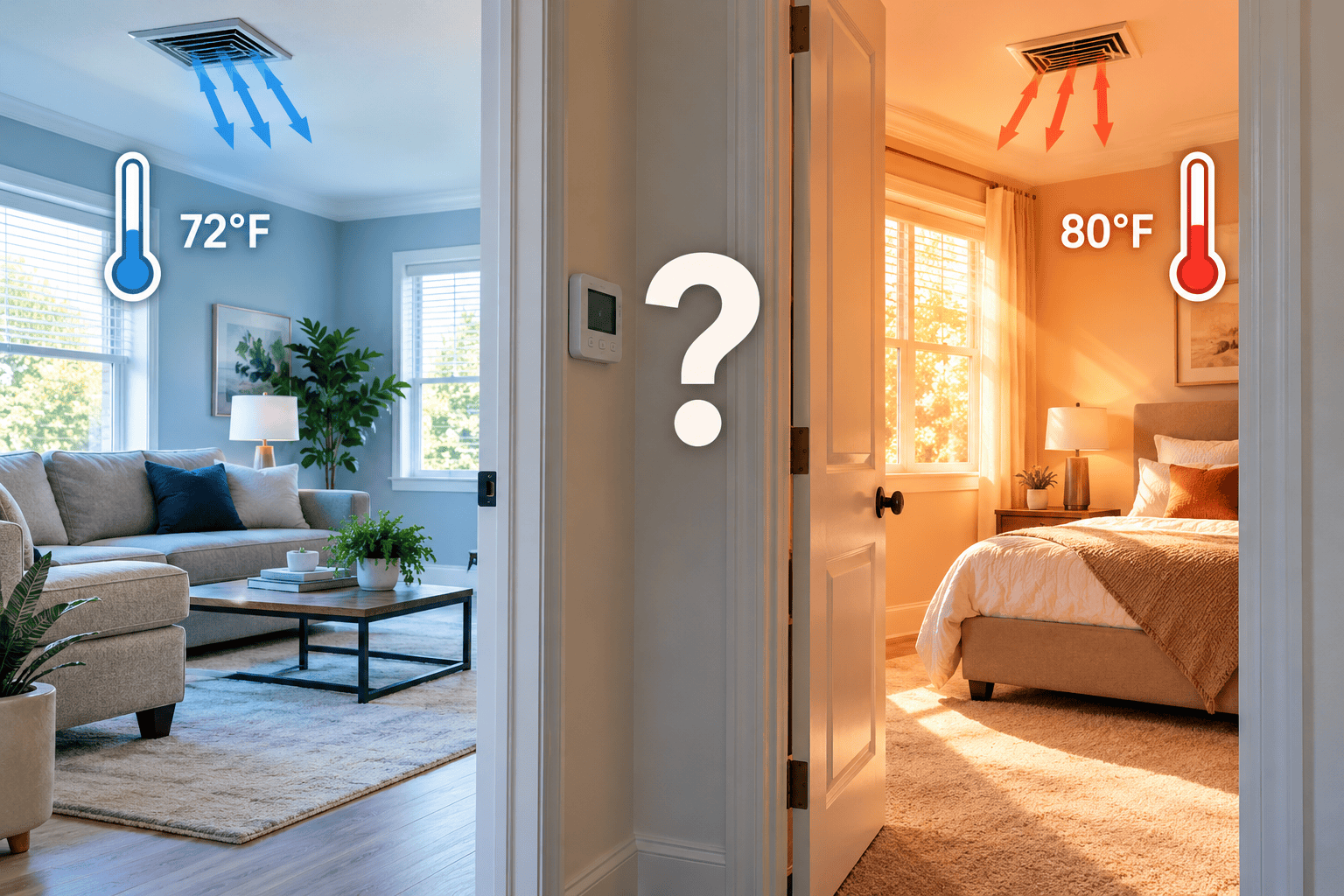
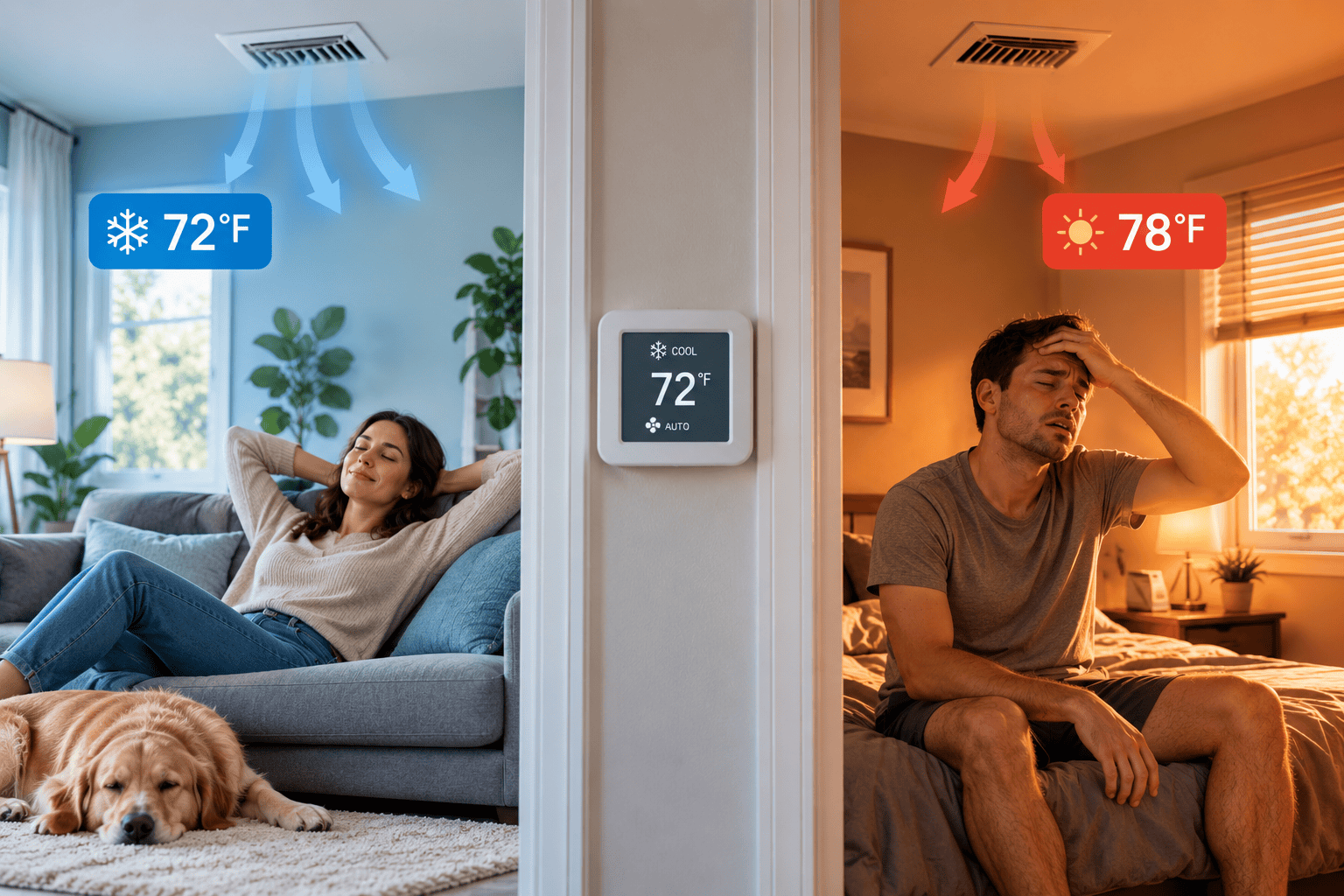
6. Don’t Ignore Uneven Temperatures Between Rooms
Does your bedroom feel freezing while the living room stays warm?
Uneven temperatures can result from several issues, including restricted airflow, duct leakage, insulation differences, thermostat placement, or equipment problems.
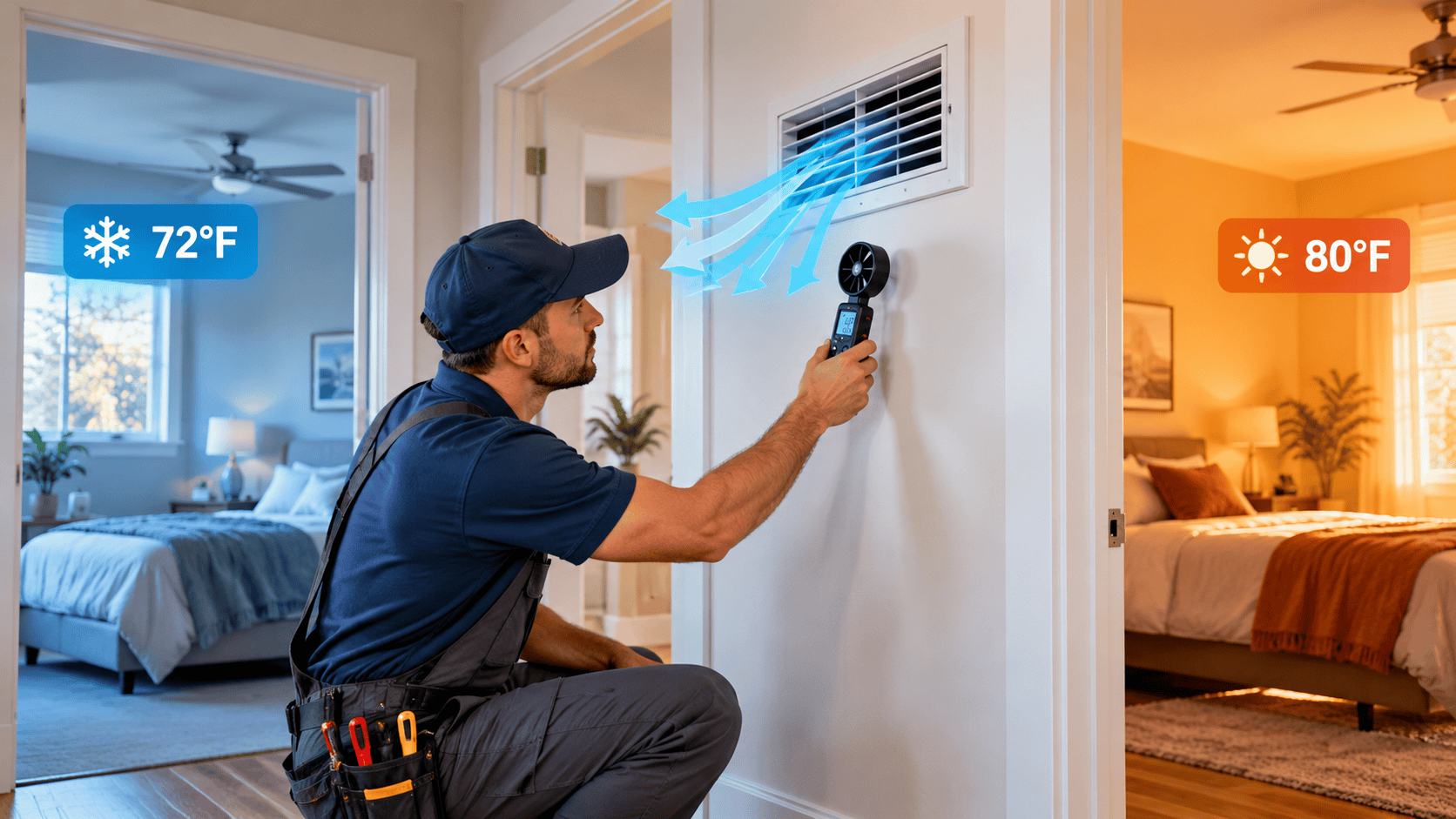
Before assuming the HVAC system needs replacement, check that supply and return vents aren’t blocked by furniture, rugs, or other objects.
Also pay attention to rooms that consistently take much longer to heat or cool.
Persistent temperature differences may justify a professional airflow or ductwork evaluation.
Homeowner tip: Closing multiple vents to force air into another room can increase duct pressure and create additional problems in some systems.
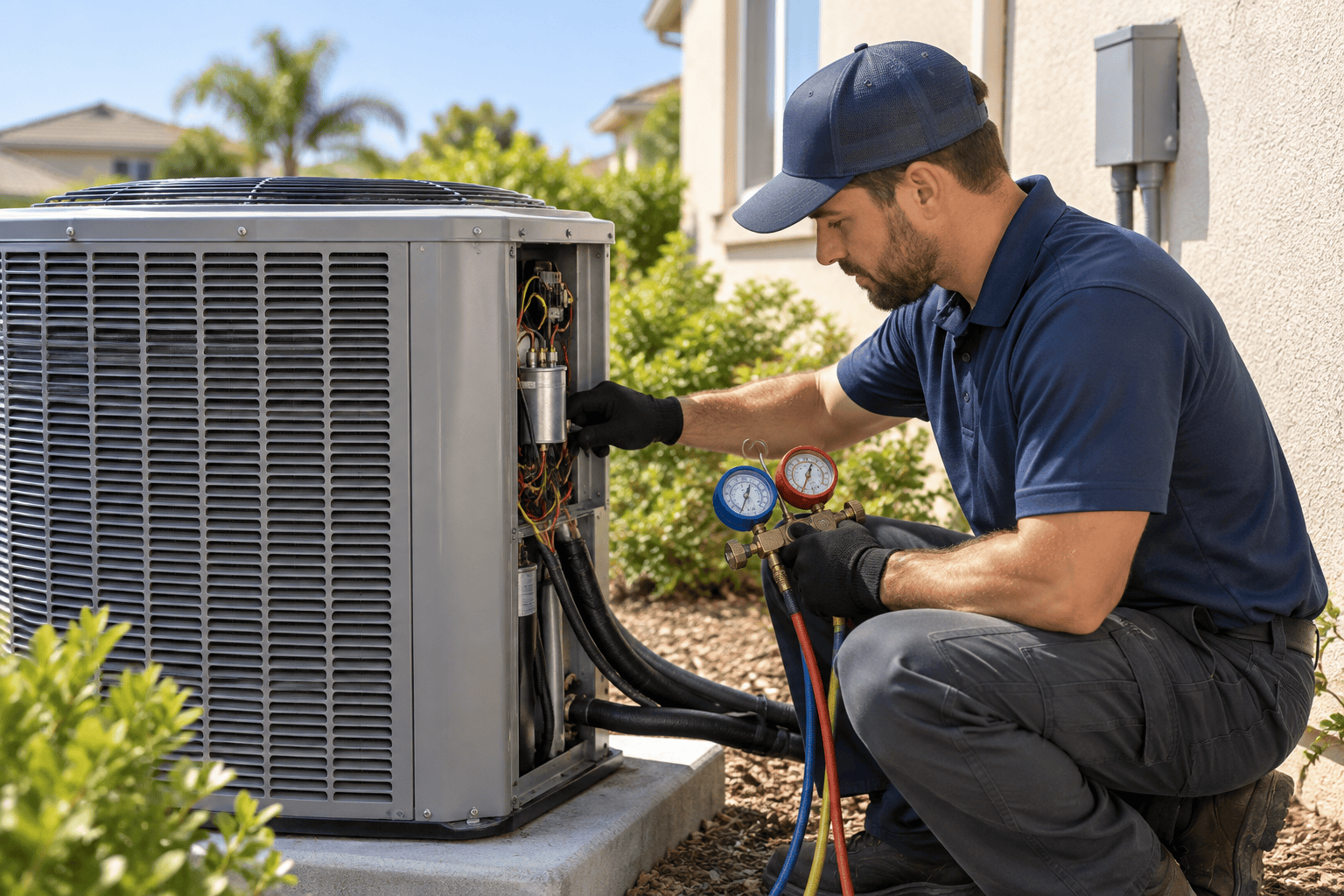
7. Know When an Aging HVAC System Needs Professional Attention
An HVAC system doesn’t have to stop working completely before showing signs of trouble.
Common warning signs include:
- Frequent cycling or unexpected shutdowns.
- Unusual grinding, rattling, or buzzing noises.
- Weak airflow or inconsistent heating.
- Unexpected increases in energy consumption.
- Repeated repairs without lasting improvement.
These symptoms don’t automatically mean you need a new system. In many cases, a professional inspection can determine whether a targeted repair is appropriate.
If replacement is necessary, a properly sized high-efficiency heat pump may be worth considering for Southern California’s relatively mild climate.
A Little Fall Preparation Can Make a Big Difference
Southern California’s mild weather can make HVAC preparation easy to overlook. But a comfortable home depends on more than simply turning the thermostat up or down.
Checking filters, keeping outdoor equipment clear, monitoring moisture, and responding to early warning signs can help reduce avoidable problems as temperatures change.
And when something doesn’t seem right, getting professional advice early can help prevent a minor issue from becoming a major inconvenience.
Need HVAC Repair or Heat Pump Service in Southern California?
At Cooling & Heating Repair, we help homeowners stay comfortable through changing seasons with professional HVAC repair, AC installation, and heat pump services.
Whether your system is struggling to maintain a consistent temperature, making unusual noises, or no longer performing as expected, our team is ready to help.
Contact Cooling & Heating Repair today to schedule professional HVAC service and keep your home comfortable this fall.
Serving homeowners across Los Angeles County, Orange County, Riverside County, San Bernardino County, and surrounding Southern California communities.