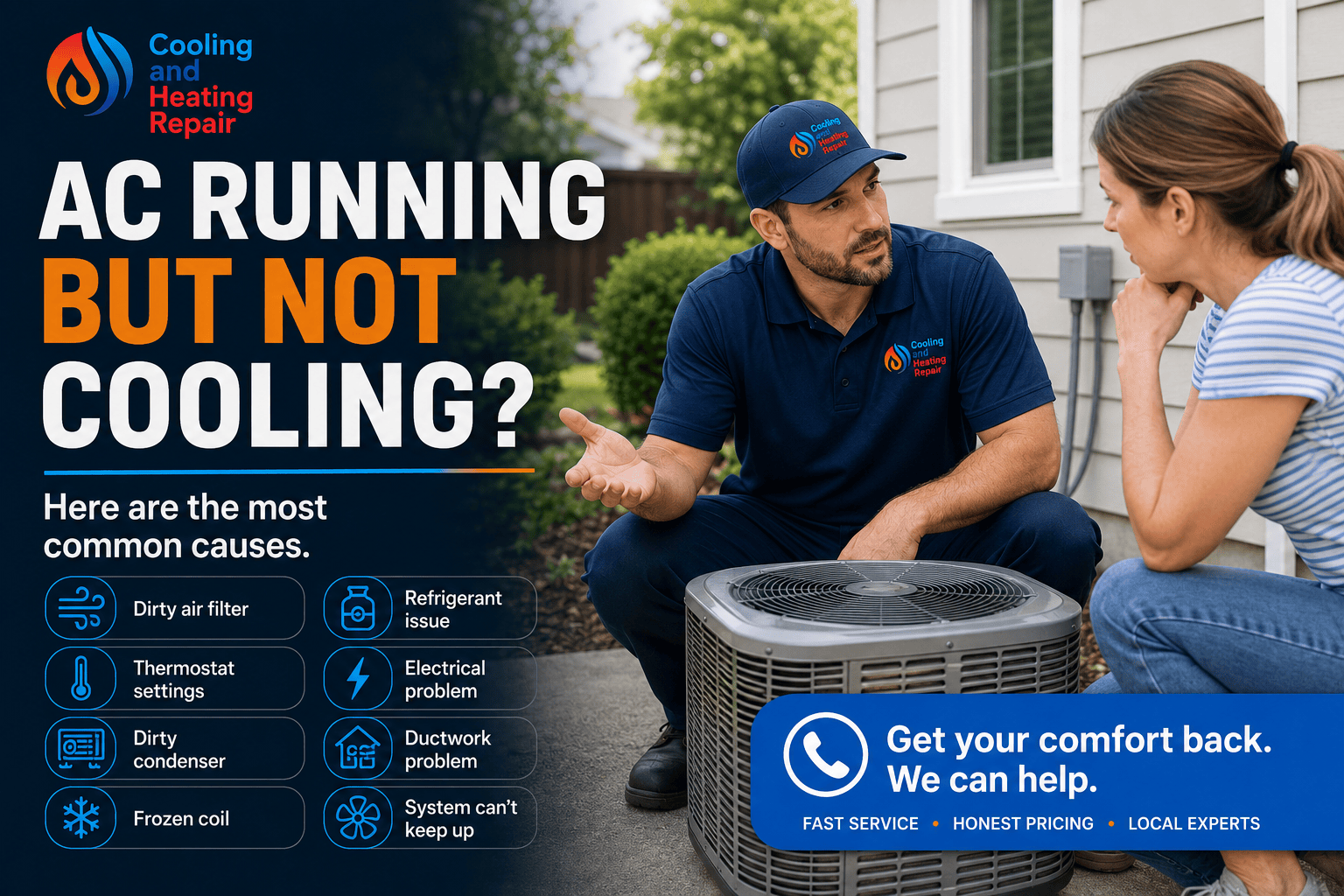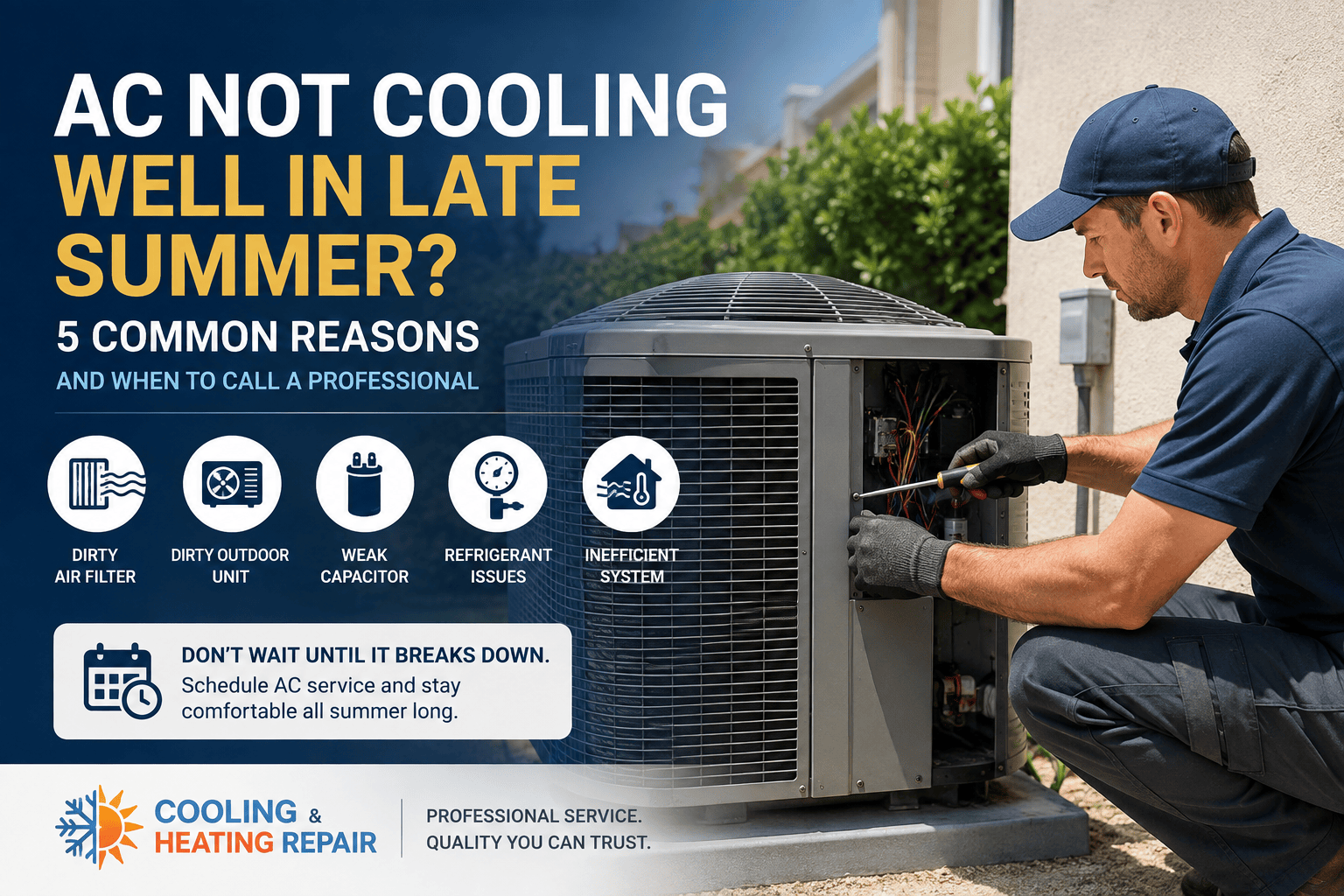
A running air conditioner isn’t always a healthy air conditioner. In fact, some of the most expensive cooling problems begin while the system appears to be operating normally.
You hear the familiar hum of the outdoor unit. Air flows through the vents. The thermostat displays the temperature you selected. Yet certain rooms remain uncomfortable, your energy bills are climbing, or your AC seems to run longer than it used to.
For homeowners in Southern California, these changes are worth paying attention to. Long cooling seasons, high outdoor temperatures, and frequent AC use can expose problems that might otherwise go unnoticed.
The challenge is knowing whether your system needs a relatively straightforward repair, a more involved diagnosis, or eventually a replacement.
Let’s explore what your air conditioner may be telling you.
1. Your AC Runs for Hours Without Reaching the Desired Temperature
One of the clearest signs of declining cooling performance is an air conditioner that struggles to reach the thermostat setting.
During extremely hot weather, even a properly functioning system may run for extended periods. However, if your AC previously cooled your home comfortably under similar conditions and now struggles to do so, something may have changed.
Possible causes include:
- Restricted airflow through the system
- Dirty indoor or outdoor coils
- Low refrigerant levels caused by a leak
- Weak or failing electrical components
- Deteriorating compressor performance
- Problems with the ductwork
The important distinction is that extended operation is a symptom, not a diagnosis.
For example, a refrigerant leak and a severely restricted air filter can both reduce cooling performance, but they require very different solutions.
A professional diagnosis helps identify the underlying issue rather than simply treating the most visible symptom.
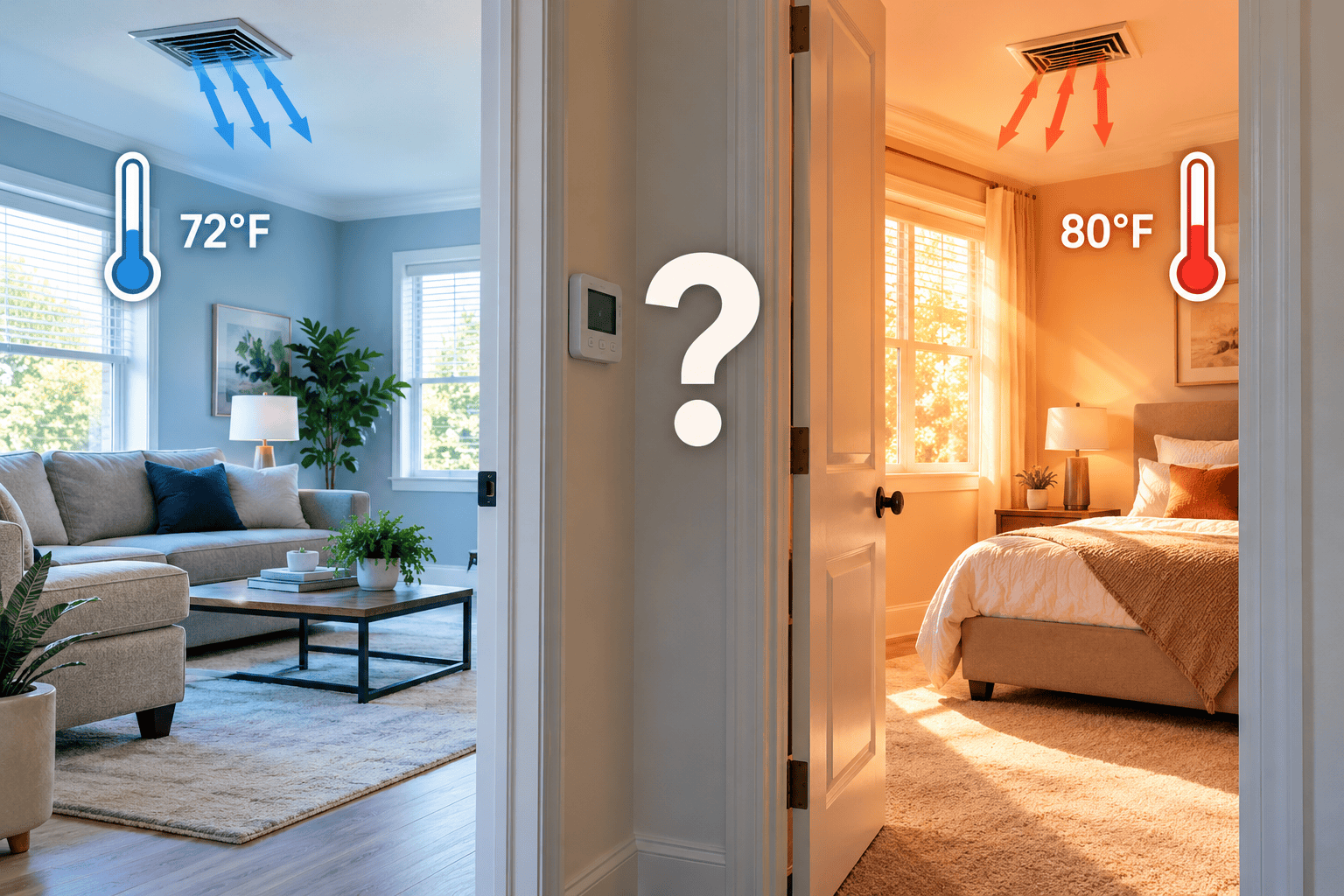
2. Some Rooms Feel Comfortable While Others Stay Warm
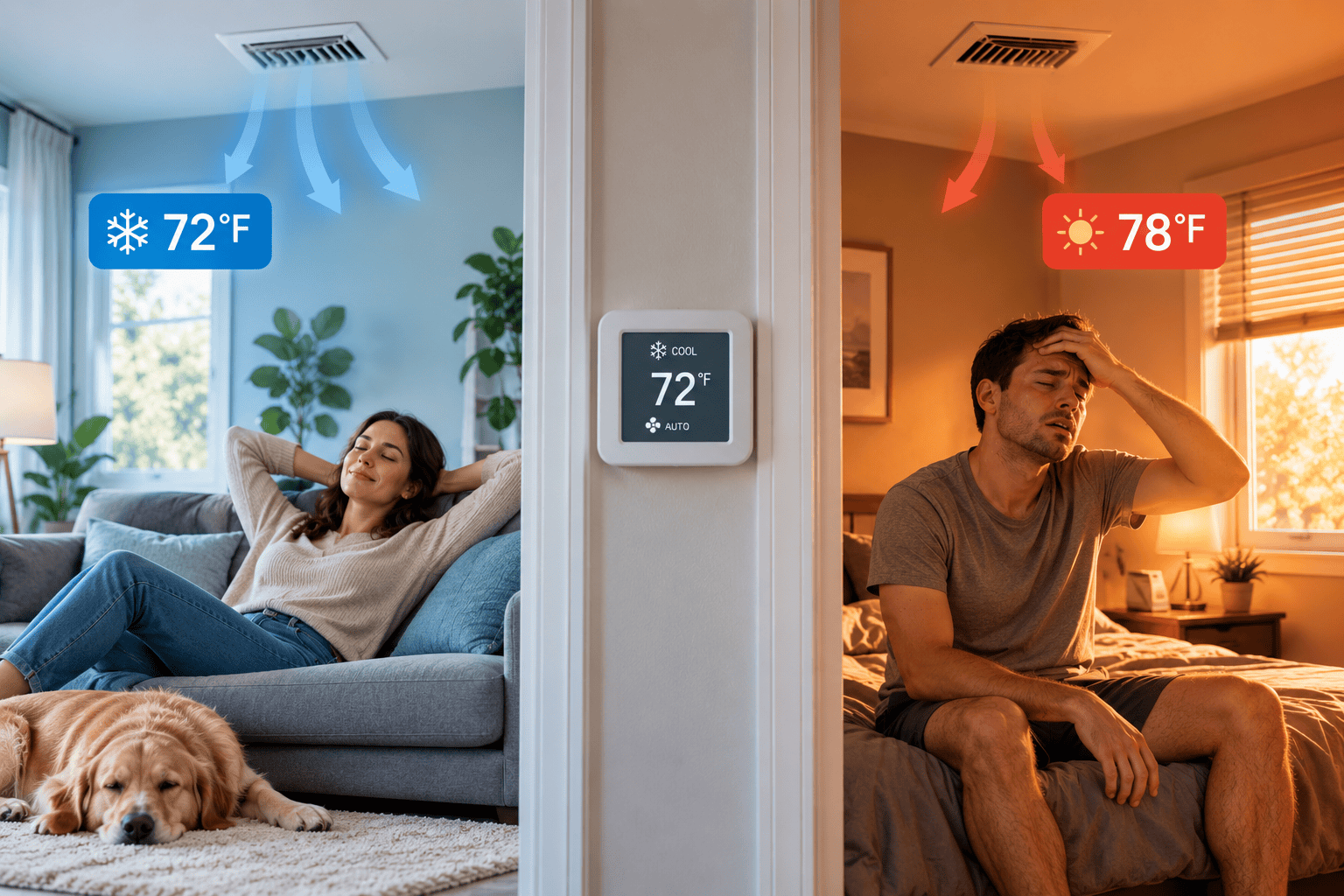
Uneven cooling is a common complaint among homeowners, particularly in larger or multistory properties.
You might notice that your living room feels comfortable while an upstairs bedroom remains several degrees warmer.
Sometimes this difference is related to sunlight exposure, insulation, window placement, or the natural movement of heat through a home.
In other cases, the AC system may be contributing to the problem.
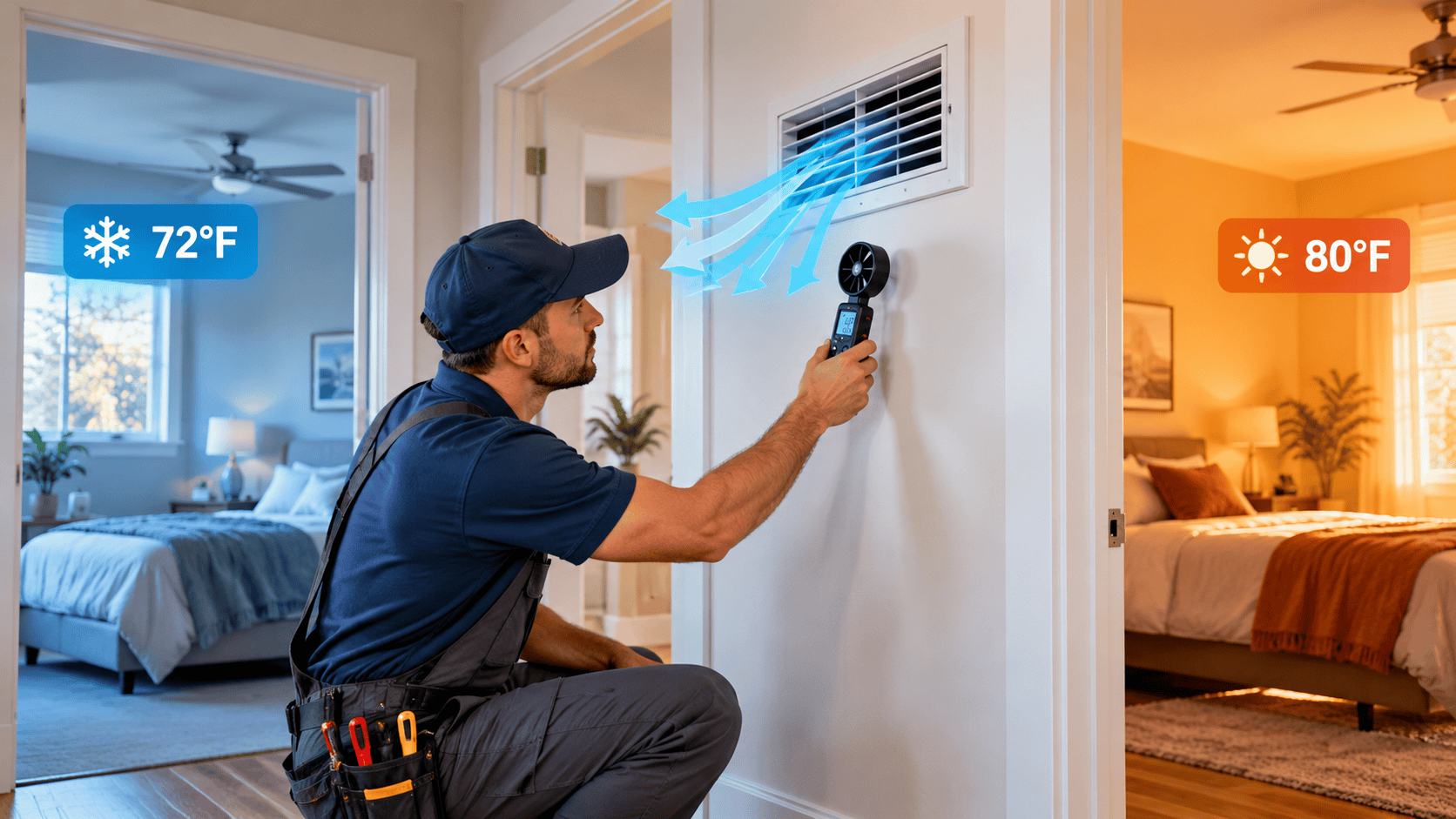
Potential issues include damaged or leaking ductwork, airflow restrictions, improperly balanced air distribution, or a system that was not correctly sized for the property.
Why does system sizing matter?
An oversized air conditioner may cool the area around the thermostat quickly and shut off before the rest of the home becomes comfortable. An undersized system may struggle to handle the home’s cooling load during peak summer temperatures.
Before investing in a larger unit, it is important to determine whether the existing equipment is actually the source of the problem.
Replacing an air conditioner without evaluating airflow and duct conditions may leave the original comfort issue unresolved.
3. Your Electricity Bill Is Increasing Without an Obvious Reason
An unexpectedly high electricity bill can be frustrating, especially when your household habits haven’t changed.
Although utility rates and weather conditions can affect monthly costs, declining AC efficiency can also contribute.
As certain components become less effective, the system may need to operate longer to deliver the same amount of cooling.
For example, a dirty condenser coil can make it harder for the air conditioner to release heat outdoors. Restricted airflow can reduce heat transfer at the indoor coil. Both conditions may negatively affect performance.
However, higher electricity consumption does not automatically mean your compressor is failing.
Before drawing conclusions, compare your energy usage with similar months from previous years, taking outdoor temperatures into account.
If your AC appears to be operating longer while delivering less comfort, a professional inspection can help determine whether an equipment problem is responsible.
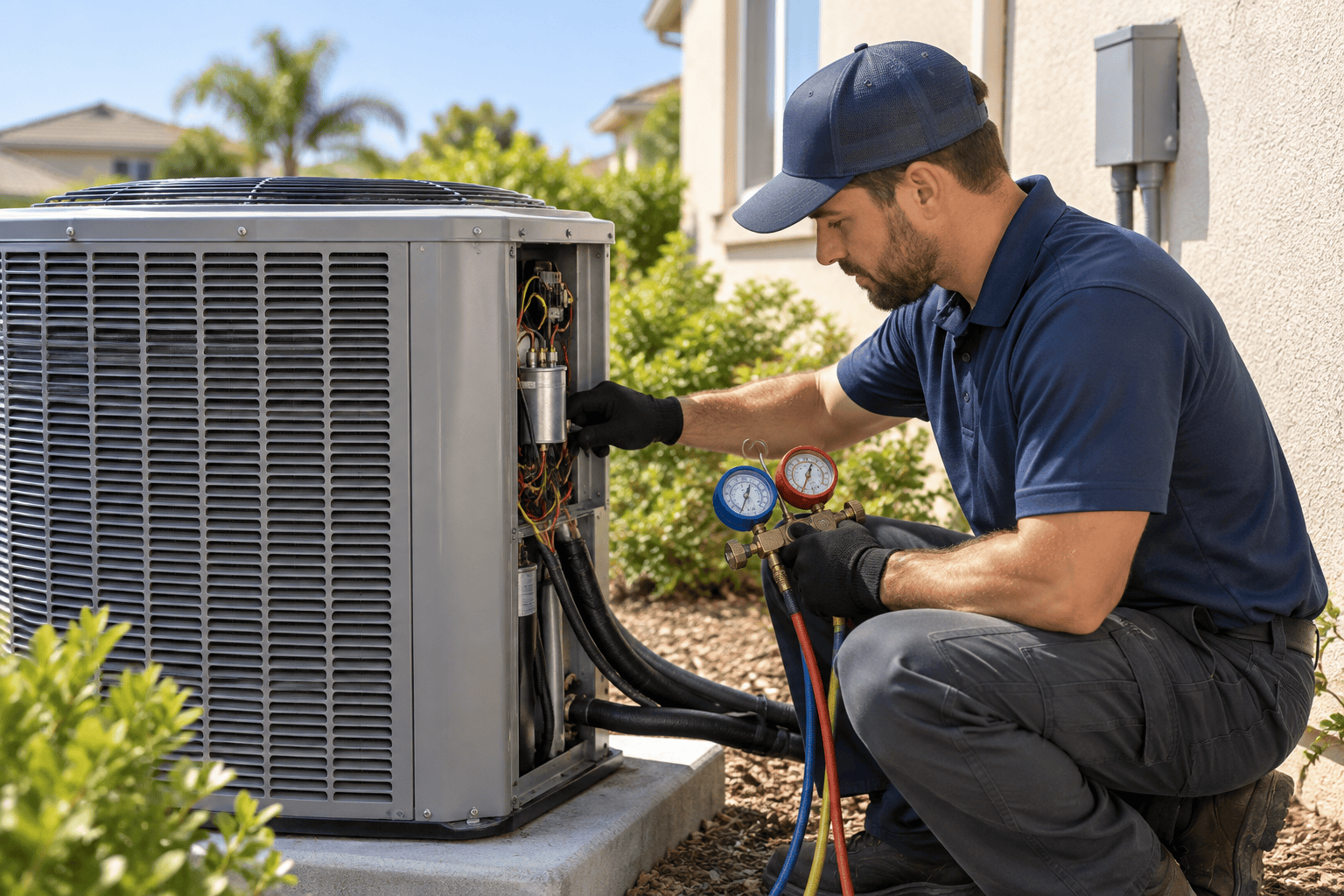
4. Your Outdoor AC Unit Makes Unusual Noises
Most central air conditioning systems produce some operational noise.
A steady fan sound and a low mechanical hum are generally expected.
New or unusual sounds deserve closer attention.
Buzzing or humming
These sounds may be associated with electrical components, a contactor, a motor, or other mechanical issues.
Rattling
Rattling may indicate loose panels, hardware, or components affected by vibration.
Grinding or screeching
These sounds can point toward motor or bearing problems and should not be ignored.
Repeated clicking
A click during normal startup or shutdown may be expected. Repeated clicking accompanied by failure to start may indicate an electrical or control problem.
If your outdoor unit makes a loud, unfamiliar sound or repeatedly attempts to start without running properly, turn the system off and arrange a professional evaluation.
Avoid opening electrical compartments or attempting to test capacitors yourself. HVAC electrical components can retain a dangerous charge even when power is disconnected.
5. Your AC Blows Air, But the Air Isn’t Cold
This is one of the most confusing situations for homeowners.
The indoor fan is running, air is coming from the vents, and the thermostat appears to be working. Yet the house keeps getting warmer.
Why?
The indoor blower and the cooling components do not always fail together.
Your fan may continue circulating air even when the outdoor condenser is not operating correctly.
Possible explanations include:
- A failed capacitor or contactor
- A compressor that is not starting
- Refrigerant-related problems
- A frozen evaporator coil
- Restricted airflow
- A thermostat or control issue
Some problems can be repaired without replacing the entire air conditioning system.
For example, a failed electrical component may prevent an otherwise functional outdoor unit from starting.
However, the same symptoms can also be associated with more serious equipment failures.
That is why replacing parts based on guesswork is rarely a good strategy.
6. When Does AC Repair Make More Sense Than Replacement?
Not every aging or underperforming air conditioner needs to be replaced.
The right decision depends on several factors, including the age of the system, the nature of the failure, repair cost, equipment condition, and expected future reliability.
Repair may be the better choice when:
- The problem is limited to a replaceable component.
- The system has otherwise been operating reliably.
- The repair cost is reasonable relative to replacement.
- The equipment is compatible with available replacement parts.
- The system continues to meet the home’s cooling needs.
Replacement may deserve consideration when:
- Major components have failed.
- The system experiences repeated expensive breakdowns.
- The equipment is significantly less efficient than modern alternatives.
- Repair costs are approaching a substantial portion of replacement costs.
- The system no longer provides adequate cooling despite addressing underlying issues.
An older air conditioner is not automatically a bad air conditioner.
Likewise, a newer system is not guaranteed to be worth repairing in every situation.
The best decision starts with understanding what has failed and what it will cost to restore dependable cooling.
A trustworthy HVAC professional should be able to explain the diagnosis, available repair options, and circumstances under which replacement may provide better long-term value.
7. Could a Heat Pump Be a Better Long-Term Solution?
If your existing central AC system is approaching the end of its useful life, a heat pump may be worth considering.
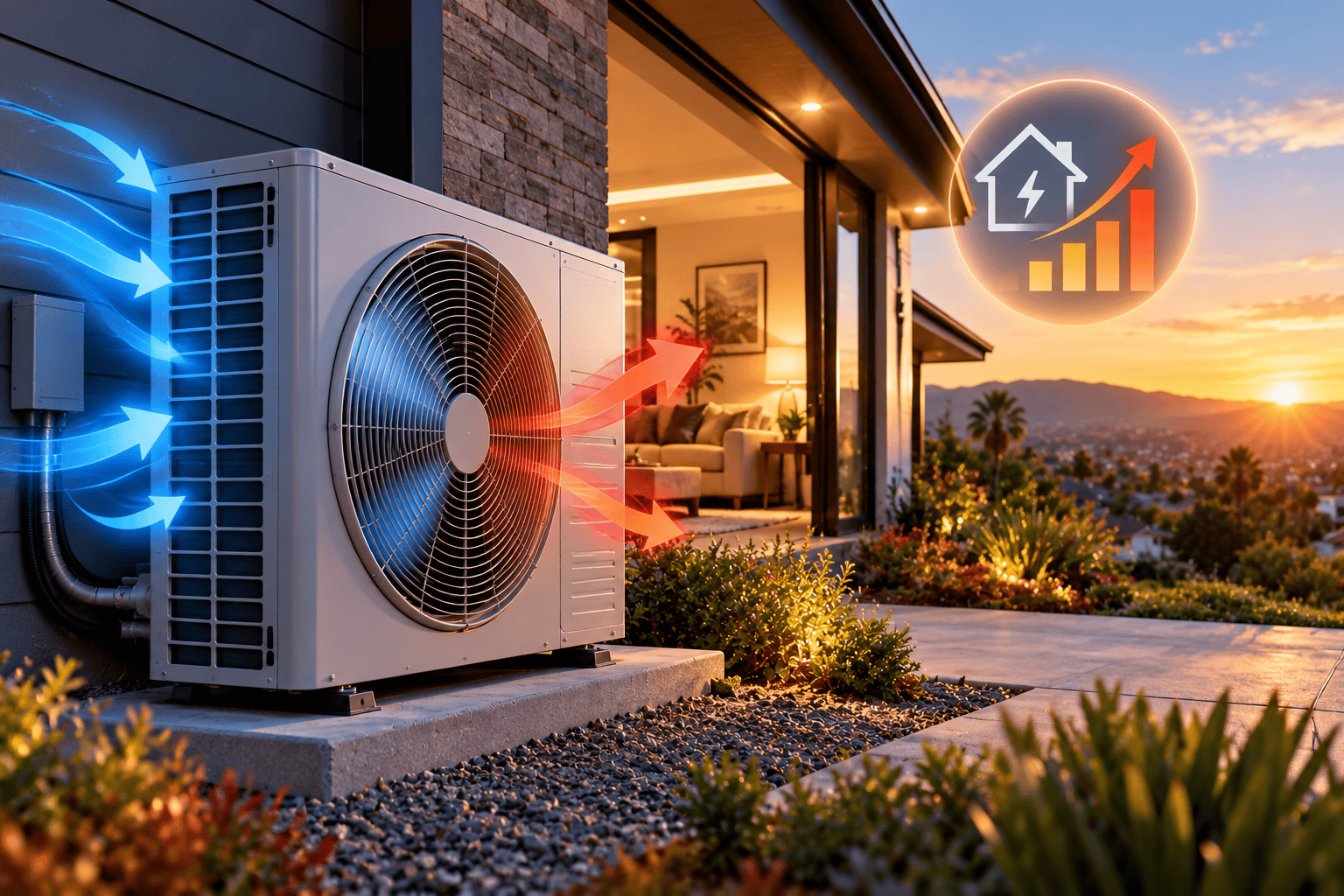
Modern air-source heat pumps provide both cooling and heating by transferring heat rather than generating it through combustion.
During summer, a heat pump operates much like a conventional air conditioner, moving heat from inside your home to the outdoors.
During cooler weather, the refrigeration cycle reverses to provide heating.
For many Southern California homes, where winters are relatively mild, heat pumps can be an attractive option.
However, choosing the right system requires more than comparing equipment prices.
A proper evaluation should consider:
- The home’s heating and cooling loads
- Existing ductwork and airflow
- Electrical infrastructure
- Equipment efficiency and capacity
- Installation requirements
- Available incentives and long-term operating costs
A heat pump is not automatically the right solution for every property. Professional system selection and installation are essential to achieving the intended comfort and efficiency.
8. What Should You Do Before Calling an AC Technician?
If your air conditioner is not cooling properly, there are a few basic checks you can safely perform.
Check your thermostat. Confirm that it is set to cooling mode and that the selected temperature is below the current indoor temperature.
Inspect the air filter. A heavily clogged filter can restrict airflow and affect cooling performance. Replace it with the correct type and size if needed.
Look at the outdoor unit. Make sure leaves, debris, or other objects are not blocking airflow around the equipment.
Check for blocked vents. Furniture and other objects should not obstruct supply or return air openings.
Pay attention to ice formation. If you notice ice on refrigerant lines or other accessible parts of the system, turn off cooling and contact a technician. Continued operation can worsen the problem.
If these simple checks do not resolve the issue, avoid repeated attempts to restart a malfunctioning system.
Professional diagnosis is the safest way to identify electrical, refrigerant, or mechanical failures.
9. Why Accurate AC Diagnosis Matters
Two air conditioners can display almost identical symptoms while suffering from completely different problems.
One system may have a failed capacitor. Another may have a refrigerant leak. A third may be affected by airflow restrictions or a compressor issue.
Replacing components without identifying the root cause can waste money and delay the actual repair.
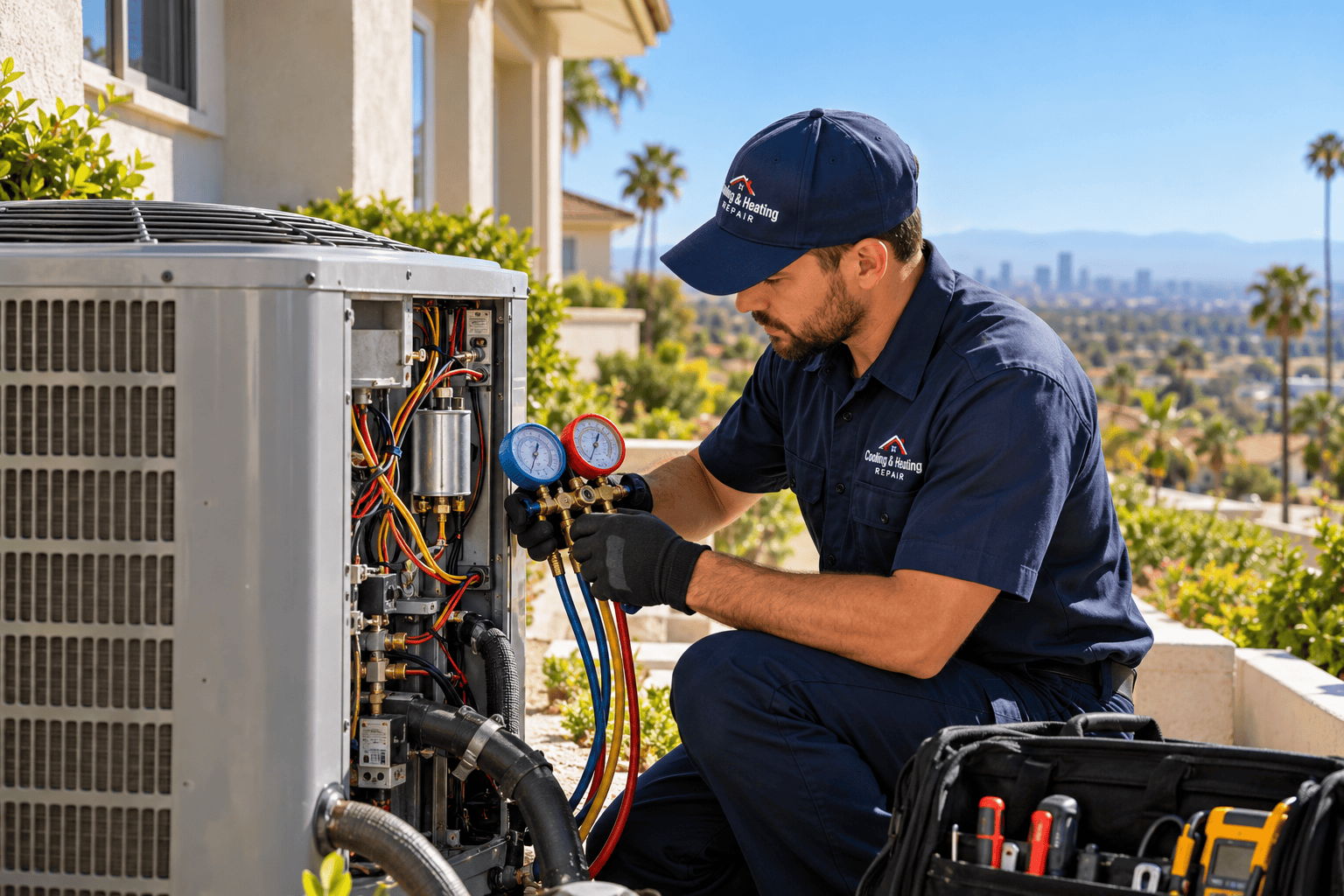
A comprehensive professional diagnosis may include electrical testing, temperature measurements, airflow evaluation, refrigerant system checks, and examination of relevant mechanical components.
The exact process depends on the symptoms and the equipment involved.
The goal is simple: understand the problem before deciding how to fix it.
For homeowners, this approach provides greater confidence when comparing repair and replacement recommendations.
10. Reliable Cooling Starts With the Right Decision
Living in Southern California means relying on your air conditioning system for much of the year.
Whether you are dealing with uneven temperatures, weak airflow, unusual noises, or an AC that simply cannot keep up with the heat, ignoring changes in performance can allow small problems to become more serious.
The good news is that many cooling issues can be diagnosed and addressed without immediately replacing the entire system.
At Cooling & Heating Repair, we help homeowners understand their cooling problems and make informed decisions about their equipment.
Our services include:
AC Repair: Professional diagnosis and repair of central air conditioning problems, from electrical failures to cooling performance issues.
AC Installation & Replacement: Equipment selection and professional installation for homeowners ready to upgrade their cooling systems.
Heat Pump Services: Diagnosis, repair, and installation solutions for efficient heating and cooling.
We serve homeowners throughout our Southern California service areas, including Los Angeles County, Orange County, and surrounding communities.
Is Your AC Trying to Tell You Something?
Don’t wait until a minor cooling problem turns into a complete system breakdown.
Contact Cooling & Heating Repair to discuss your air conditioning concerns and schedule professional service.
Cooling & Heating Repair — Comfort You Can Count On.