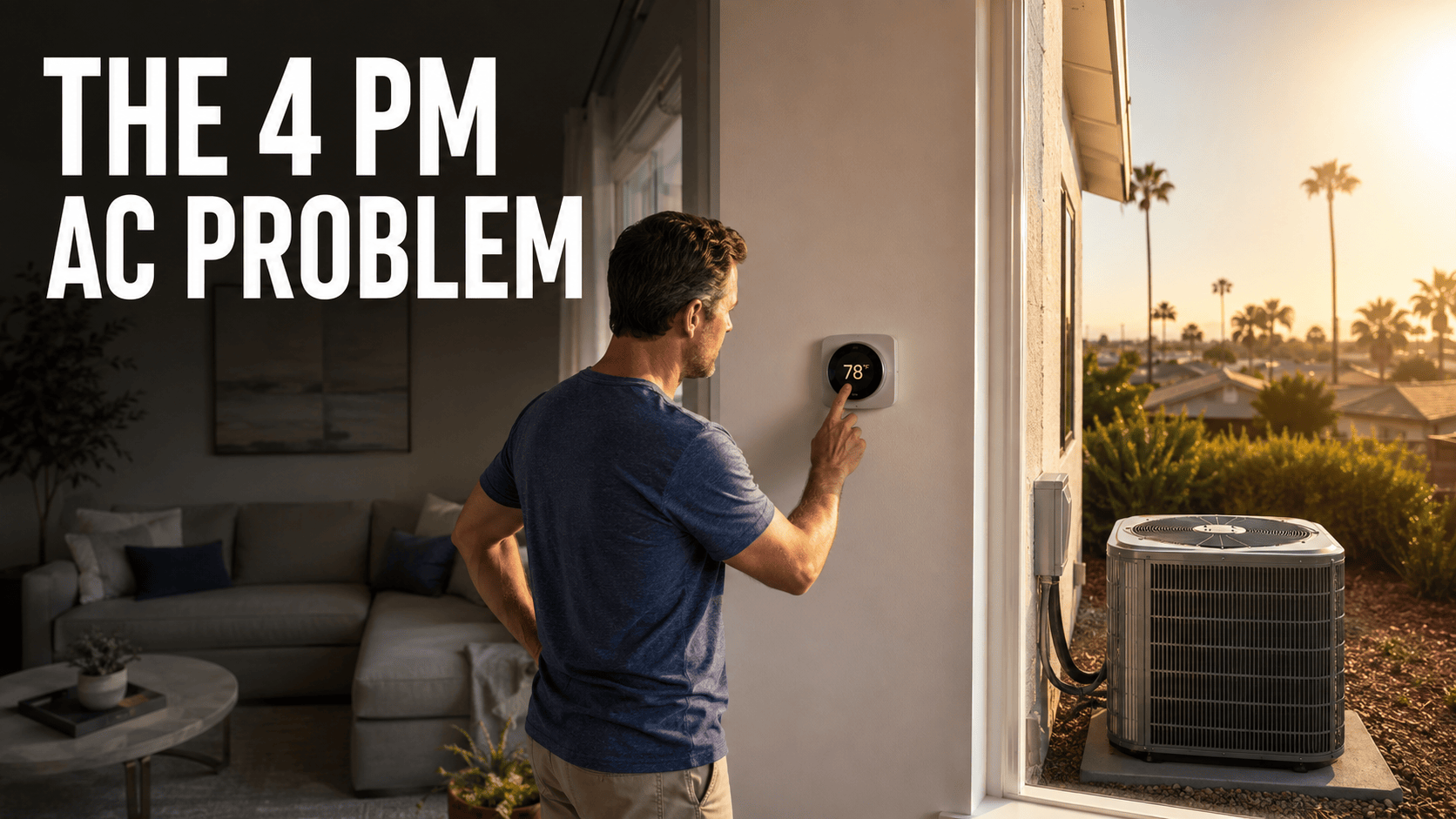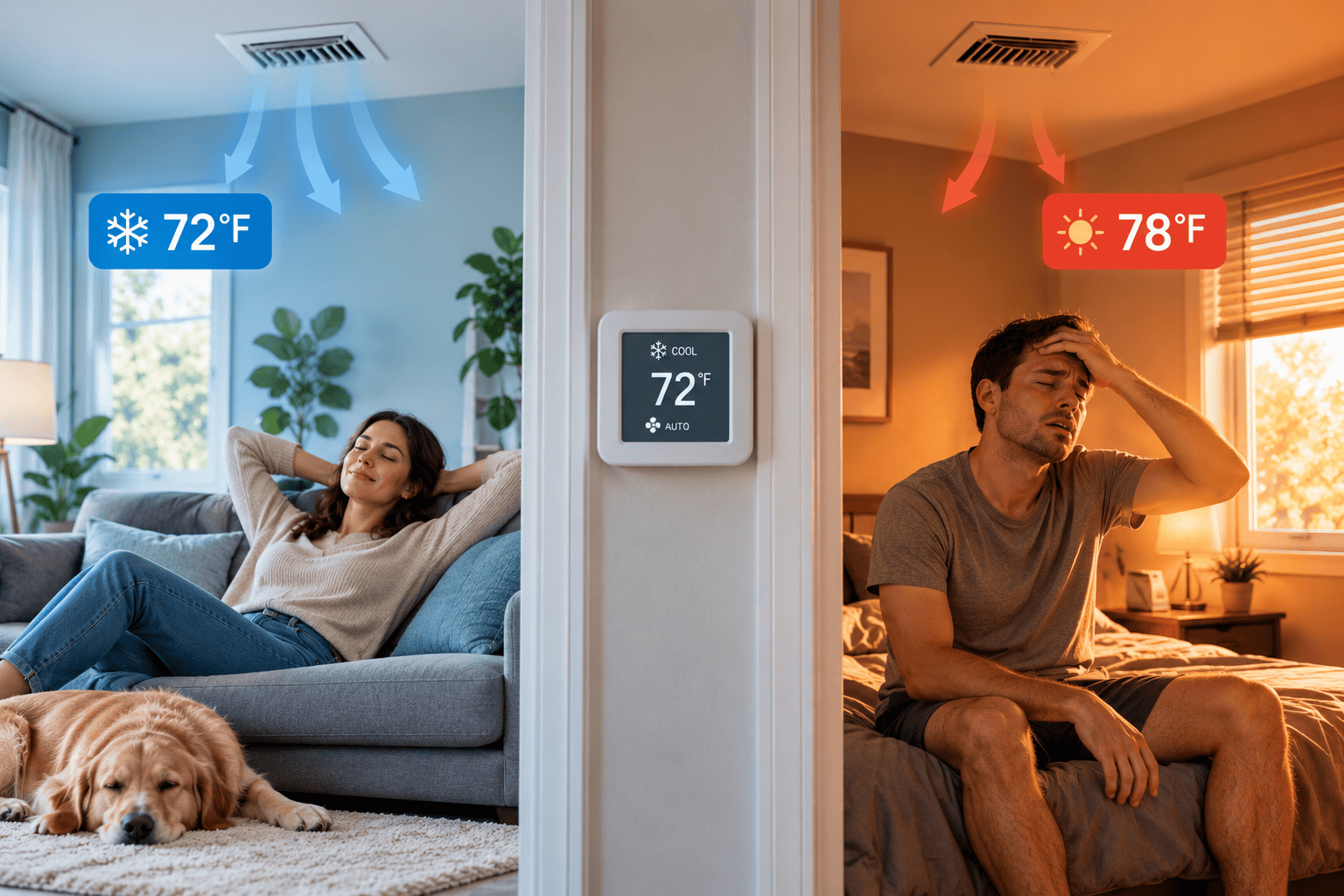
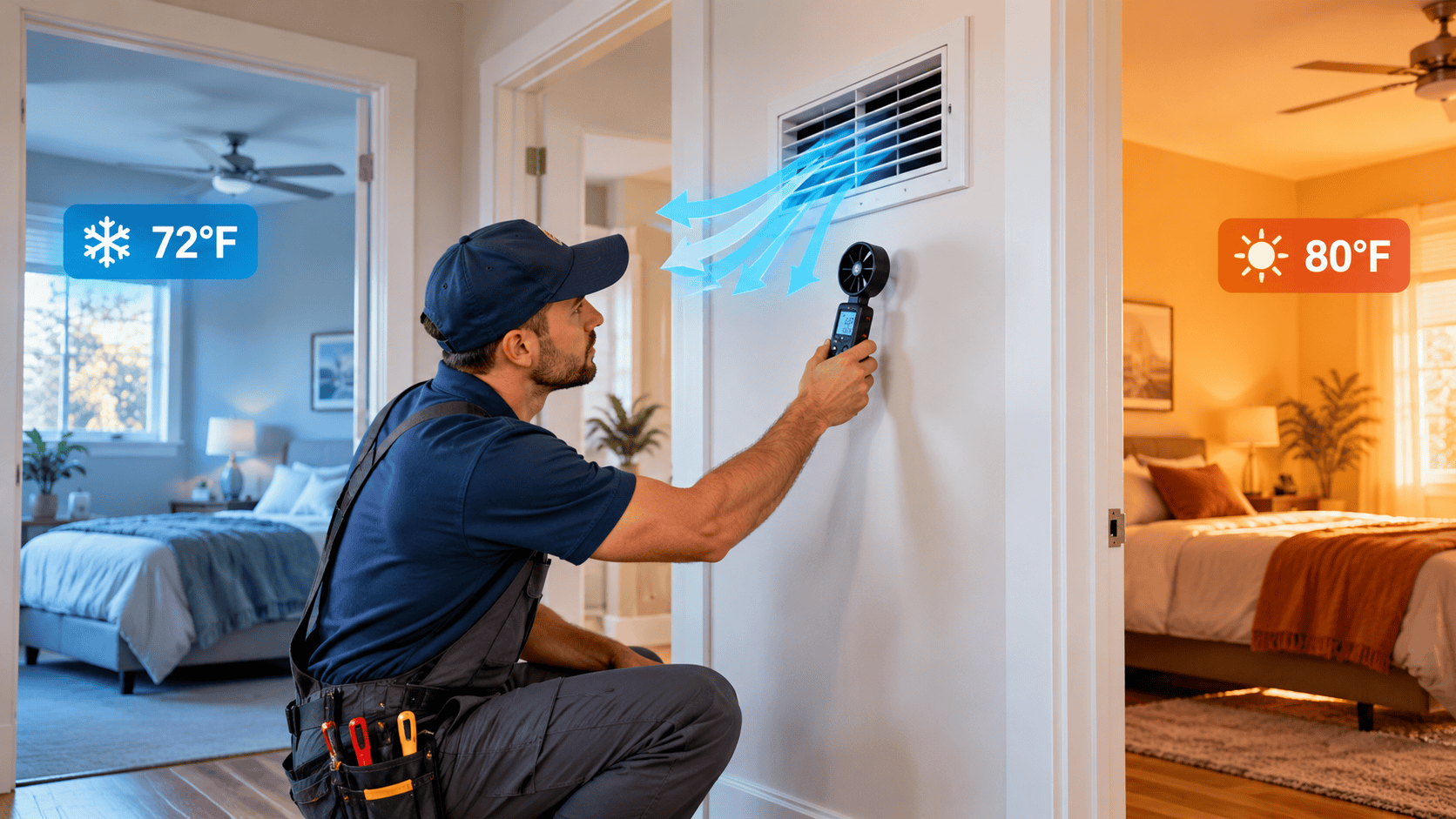
You set your thermostat to 72°F, but your bedroom feels like 80°F while the living room is perfectly comfortable. The air conditioner is running, cool air is coming from the vents, and yet certain areas of your home remain frustratingly warm.
Uneven cooling is a common problem in Southern California homes, particularly during extended periods of hot weather. Although the symptoms may seem minor at first, temperature differences between rooms can indicate airflow restrictions, ductwork problems, inadequate insulation, or an air conditioning system that isn’t performing as intended.
Understanding the possible causes can help you determine whether a simple adjustment is enough or professional AC repair is necessary.
1. Restricted Airflow Through Your Vents
Your central air conditioning system depends on balanced airflow to distribute conditioned air throughout your home.
When furniture, curtains, or other objects obstruct supply or return vents, certain rooms may receive less airflow than intended.
What to check:
- Make sure supply and return vents are unobstructed.
- Check whether the airflow feels noticeably weaker in warmer rooms.
- Look for vents that may have been accidentally closed.
- Avoid closing multiple vents to redirect air unless your HVAC system was designed for that approach.
If the airflow remains weak despite clear vents, the issue may be deeper within the ductwork or HVAC equipment.
2. Leaky or Poorly Designed Ductwork
Your duct system carries cooled air from the central unit to individual rooms. When ducts develop leaks, become disconnected, or were poorly sized during installation, some rooms may receive insufficient conditioned air.
Ductwork problems can be especially noticeable in homes with ducts running through hot attics.
Common warning signs include unusually weak airflow, rooms that never reach the thermostat setting, and higher electricity consumption without improved comfort.
A professional HVAC technician can evaluate duct condition, airflow, and system performance to determine whether duct repairs or modifications are necessary.
3. Insufficient Insulation and Excessive Heat Gain
Sometimes the air conditioning system is working correctly, but one room absorbs heat faster than the system can remove it.
Rooms with large west-facing windows, inadequate attic insulation, or significant sun exposure often experience higher temperatures than shaded areas of the home.
Upper-floor rooms can also become noticeably warmer because of roof heat gain and differences in the building’s thermal performance.
Improving insulation, sealing air leaks, and using effective window coverings can help reduce the cooling load.
However, if temperature differences remain significant, an HVAC assessment can help identify whether airflow or system capacity is contributing to the problem.
4. A Dirty Evaporator Coil or Restricted Air Filter
An air conditioner needs adequate airflow across its indoor evaporator coil to absorb heat efficiently.
A heavily restricted air filter can reduce airflow, while dirt accumulation on the evaporator coil can interfere with heat transfer.
Depending on the severity of the problem, you may notice:
- Reduced cooling performance.
- Longer operating cycles.
- Weak airflow at multiple vents.
- Ice forming on refrigerant lines or indoor components.
- Unusually high indoor humidity.
If you notice ice forming, turn off the cooling function and contact a qualified HVAC technician. Continuing to operate the system may worsen the underlying problem.
5. Incorrect Thermostat Placement
Your thermostat measures temperature at its installed location, not in every room of your house.
If the thermostat is located in a naturally cooler hallway, the system may stop cooling before warmer bedrooms reach a comfortable temperature.
Similarly, a thermostat exposed to direct sunlight or heat-producing appliances may cause the system to operate longer than necessary.
A technician can evaluate thermostat placement and determine whether compatible remote temperature sensors or a properly designed zoning system could improve comfort.
6. An Air Conditioner That Is Improperly Sized
An oversized or undersized air conditioner can create comfort problems.
An undersized system may struggle to meet the cooling demand during extreme temperatures. An oversized system may cool the thermostat area quickly and shut off before temperatures become consistent throughout the home.
However, uneven temperatures alone do not prove that an air conditioner is incorrectly sized.
Before recommending replacement, a qualified HVAC contractor should evaluate system performance, ductwork, airflow, insulation, and the home’s cooling requirements.
When replacement is appropriate, a proper load calculation helps determine suitable equipment capacity.
7. Problems With a Zoned HVAC System
Some homes use zoning systems with motorized dampers to control airflow to different areas.
When a damper actuator, zone thermostat, or control board malfunctions, one area may receive inadequate cooling even though other zones operate normally.
Possible symptoms include a zone that remains warm regardless of its thermostat setting or airflow that changes unexpectedly.
Zoning components should be inspected by a professional familiar with the equipment and its control configuration.
When Should You Call an HVAC Professional?
Minor temperature differences can be normal, especially between rooms with different sun exposure.
However, persistent or worsening differences may indicate an underlying system problem.
Consider scheduling professional AC repair if:
- One or more rooms remain uncomfortable despite normal thermostat settings.
- Airflow is significantly weaker in certain areas.
- Your system runs continuously without reaching the desired temperature.
- You notice unusual sounds, ice formation, or repeated system shutdowns.
- Your electricity bills increase without an obvious explanation.
A proper diagnosis can help identify the actual cause before unnecessary repairs or equipment replacement are recommended.
Can a New AC System Solve Uneven Cooling?
In some situations, replacing an aging air conditioner can improve comfort and energy performance.
Modern central AC systems and qualifying heat pump systems may offer variable-capacity operation, which can help maintain more consistent indoor conditions when the equipment and ductwork are properly designed.
However, new equipment will not automatically fix leaking ducts, poor insulation, or improperly balanced airflow.
That’s why a complete evaluation of the home’s cooling needs is important before investing in a replacement system.
Get Professional AC Help in Southern California
At Cooling & Heating Repair, we help homeowners diagnose and resolve central air conditioning problems, including insufficient cooling, inconsistent temperatures, and equipment performance issues.
Our services include:
- AC Repair: Diagnosis and repair of central air conditioning problems affecting comfort and cooling performance.
- AC Installation & Replacement: Professional equipment replacement and installation tailored to your home’s requirements.
- Heat Pump Services: Diagnosis, repair, and installation of qualifying heat pump systems.
If some rooms in your home stay hot while others cool normally, don’t ignore the warning signs.
Contact Cooling & Heating Repair to schedule a professional HVAC evaluation and find out what’s causing the temperature imbalance.
Visit coolingandheat.com to learn more about our services.