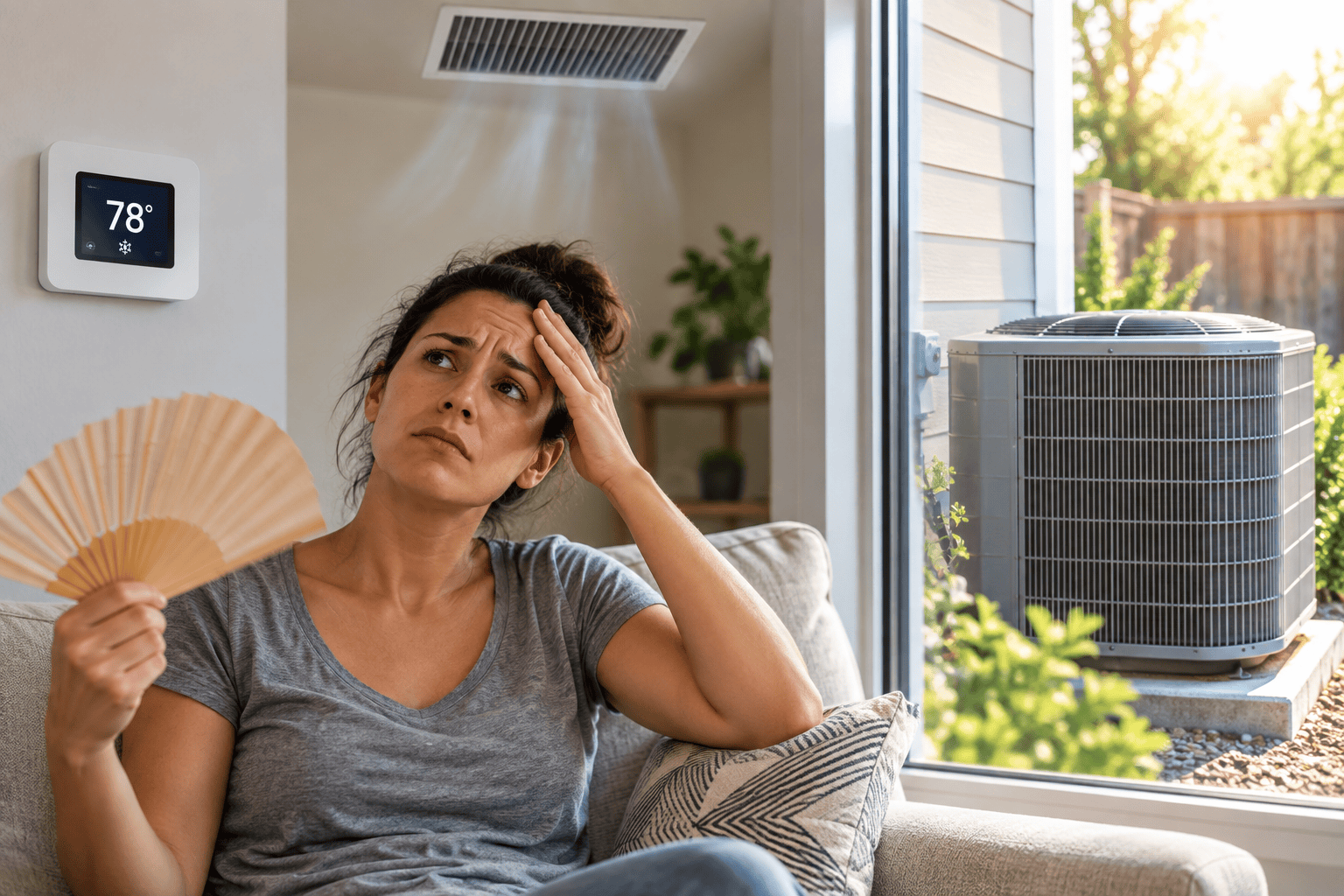
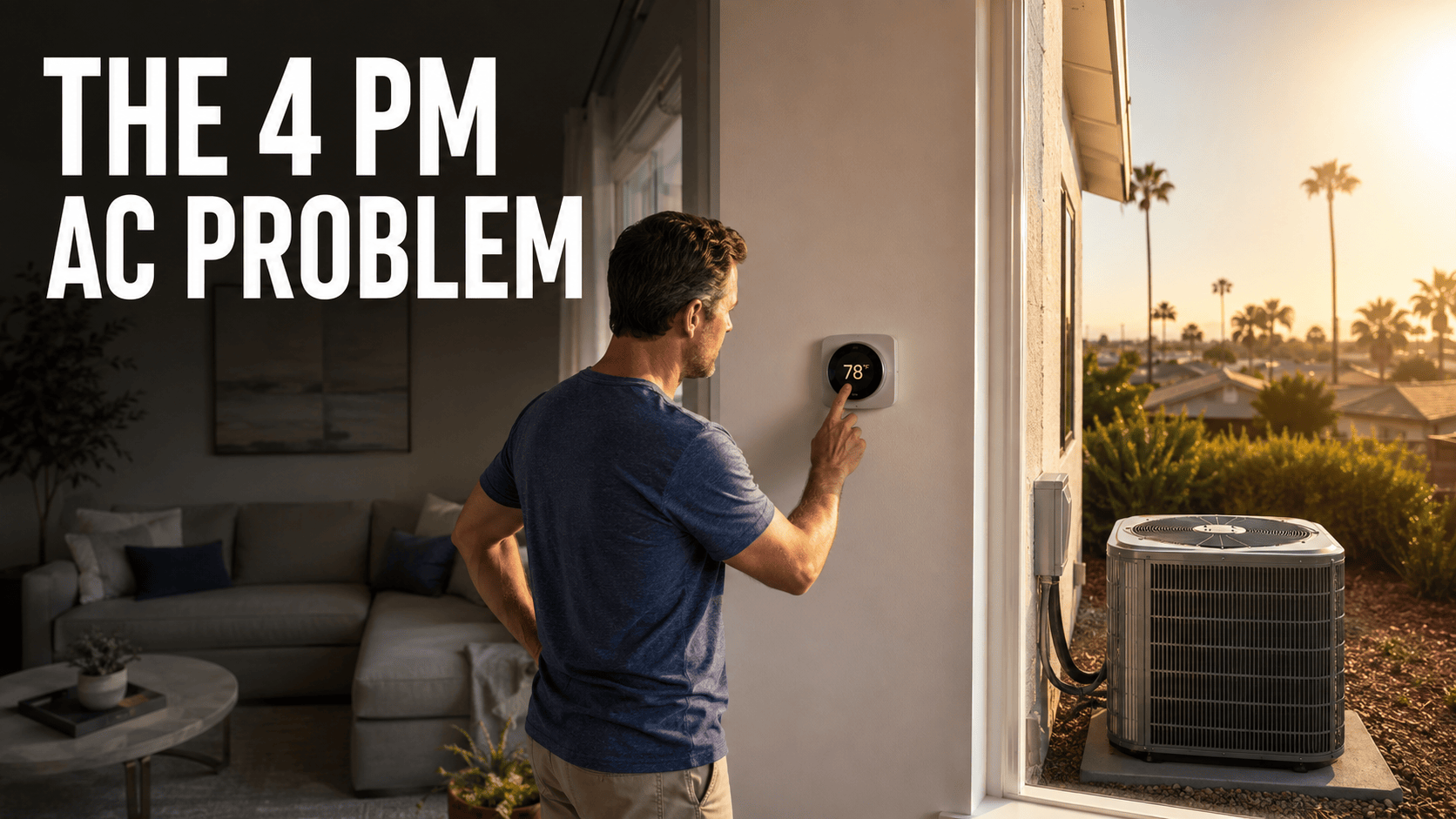
Your air conditioner works normally throughout the morning, but sometime between 3:00 and 7:00 PM, the temperature inside begins to rise. The AC keeps running, the thermostat is set correctly, and cool air may still be coming from the vents—yet your home feels warmer by the minute.
This common issue can be called the “4 PM AC problem.”
It happens when the amount of heat entering your home becomes greater than the amount your air conditioning system can remove. Southern California’s intense afternoon sun, hot attic spaces, aging HVAC equipment, leaking ductwork, and restricted airflow can all contribute to the problem.
Here is why your AC may stop keeping up in the afternoon—and how to determine whether your home needs a simple adjustment or professional HVAC service.
Why Does My House Get Hotter Around 4 PM?
The hottest part of the day does not always occur at noon. Your roof, walls, attic, windows, and outdoor surfaces continue absorbing heat for several hours after the sun reaches its highest point.
By late afternoon, that stored heat begins moving into your living space.
At the same time, your air conditioner is dealing with higher outdoor temperatures. The system must remove heat from inside your home and release it into already-hot outdoor air. If the AC is dirty, aging, improperly sized, or losing conditioned air through damaged ducts, it may no longer have enough cooling capacity to maintain the thermostat setting.
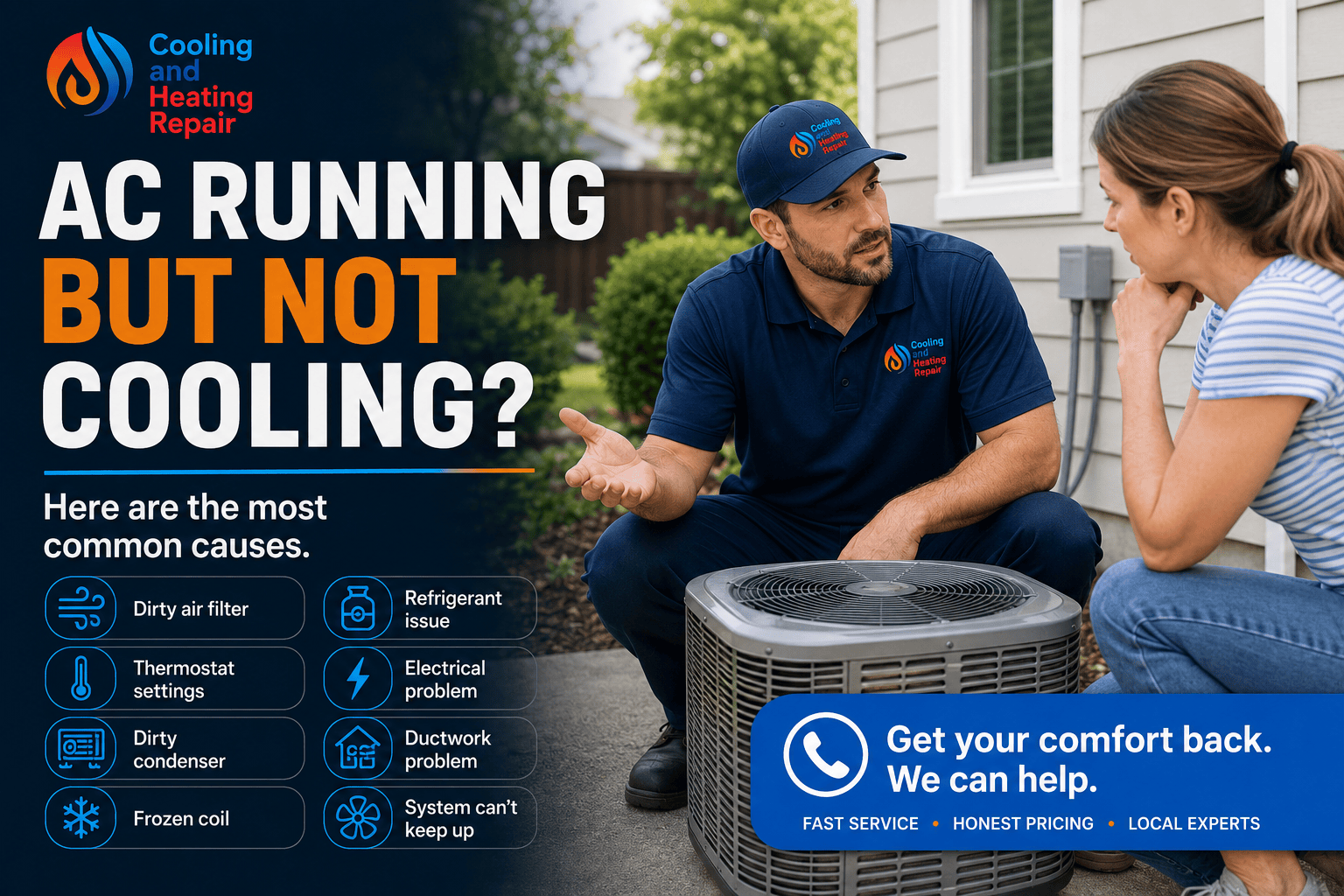
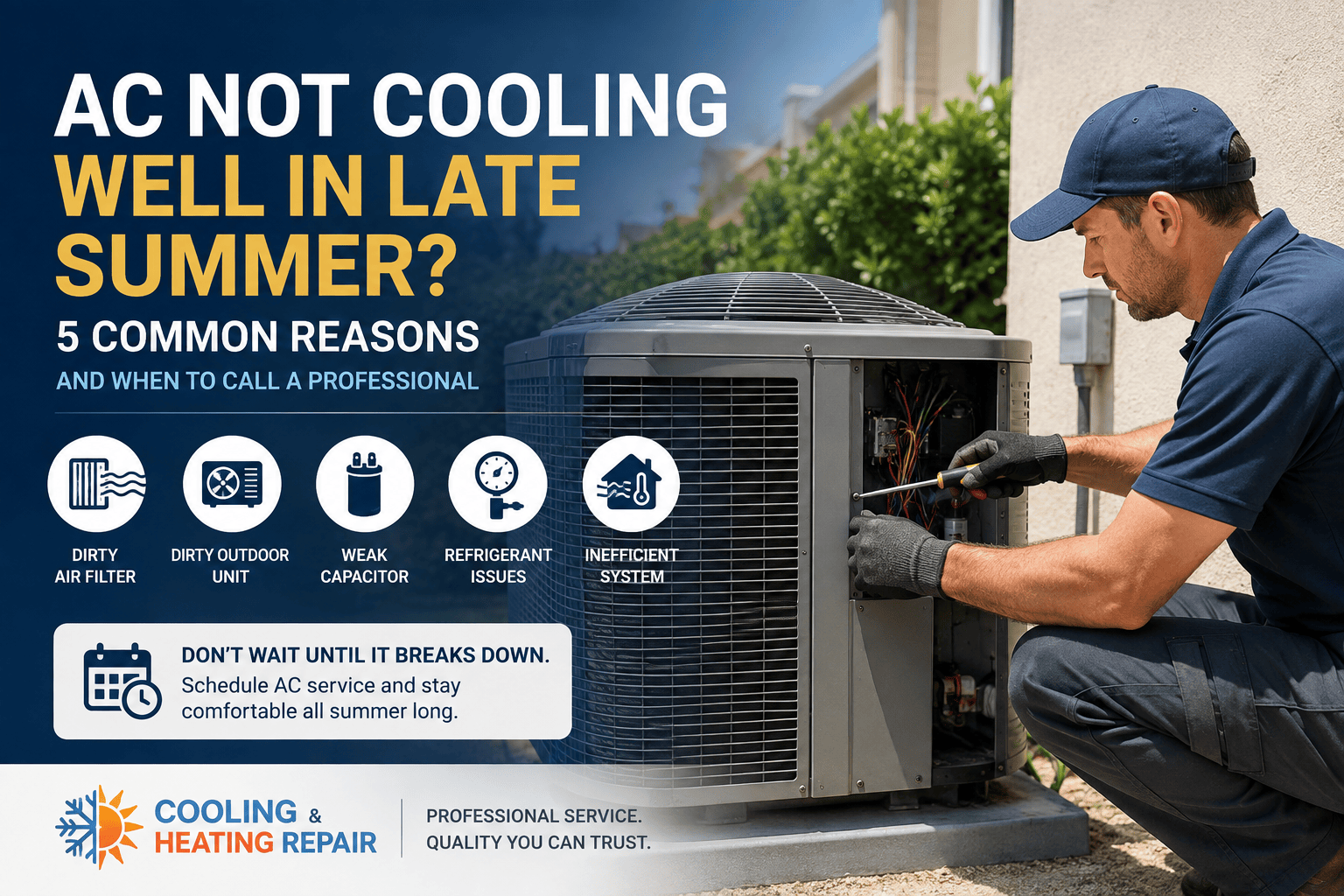
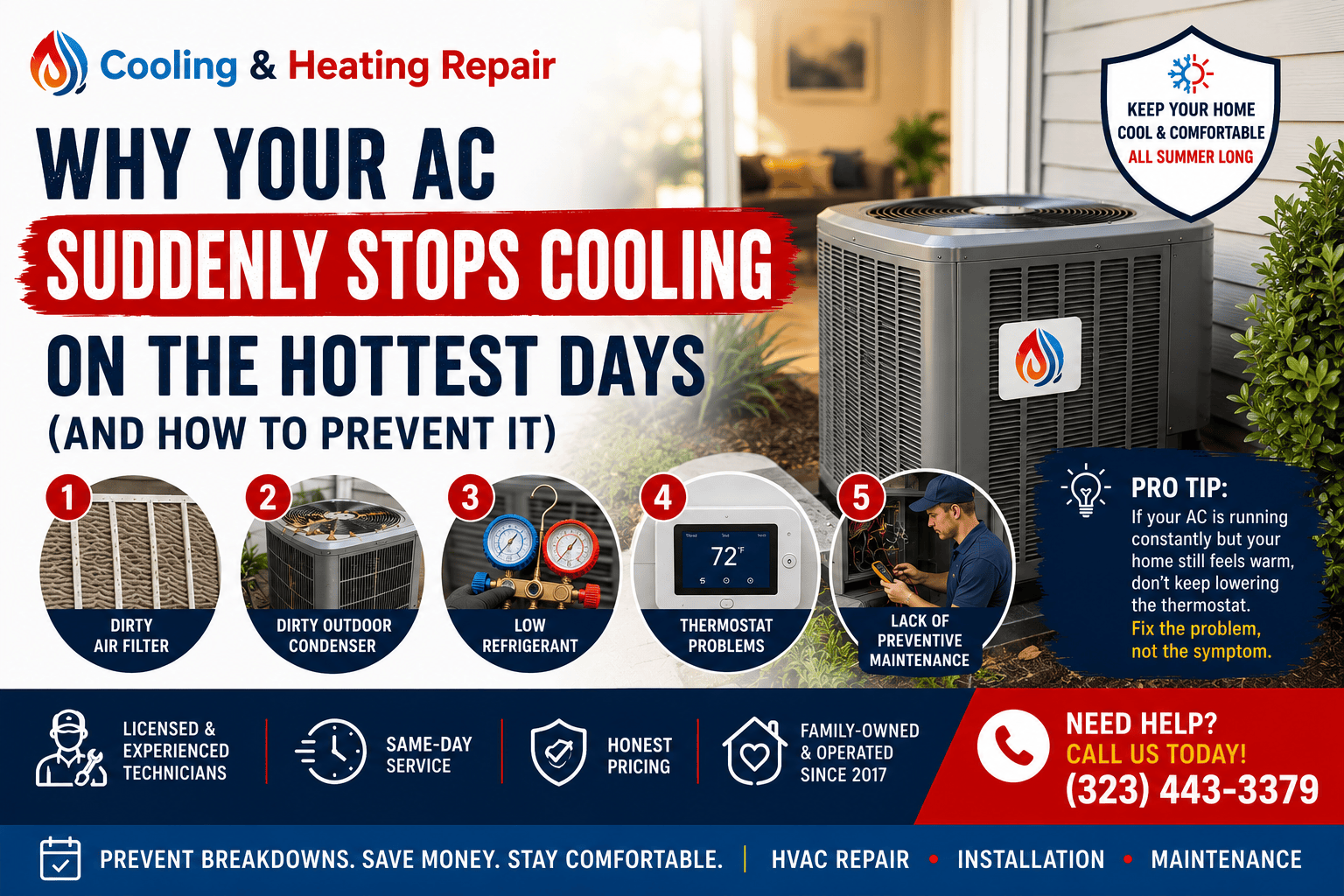
A small temperature increase during an extreme heat wave does not always mean the AC is broken. However, if the problem happens regularly or becomes progressively worse, the system should be inspected.
1. Afternoon Sun Is Heating Your Home Faster Than the AC Can Cool It
West-facing windows and walls receive intense direct sunlight during the late afternoon. Rooms on that side of the house may become noticeably warmer, even when the rest of the home feels comfortable.
Large windows, older glass, damaged weatherstripping, and limited insulation allow more heat to enter. Closing blinds or thermal curtains during the afternoon may help, but a properly operating AC should still provide consistent cooling under normal conditions.
If one side of the home is always hotter, the problem may also involve airflow balance, duct design, or insufficient return air.
2. Your Attic May Be Trapping Extreme Heat
An attic can become much hotter than the outdoor air. That heat transfers through the ceiling and into the rooms below, creating an additional cooling load.
Poor attic ventilation, damaged insulation, air leaks, and unsealed penetrations can make the problem worse. Ductwork located inside a hot attic may also absorb heat before conditioned air reaches the vents.
This is why an AC system can appear to work correctly in the morning but struggle later in the day. The equipment is not only cooling the indoor air—it is also fighting heat coming from the attic and building structure.
3. A Dirty Air Filter Is Restricting Airflow
A clogged HVAC filter limits the amount of air moving through the system. Reduced airflow lowers cooling performance and may cause the evaporator coil to become excessively cold or freeze.
Common signs of restricted airflow include:
- Weak air coming from the vents
- Longer cooling cycles
- Uneven temperatures between rooms
- Higher energy bills
- Ice on the refrigerant lines or indoor coil
- An AC that runs continuously without reaching the set temperature
Check the filter and replace it if it is visibly dirty. The correct replacement schedule depends on the filter, household conditions, pets, and how frequently the system operates.
If airflow remains weak after replacing the filter, the blower, evaporator coil, ductwork, or return-air system may need professional attention.
4. The Outdoor Condenser Coil Is Dirty
Your outdoor AC unit releases heat removed from the house. Dirt, dust, leaves, and other debris can collect on the condenser coil and reduce its ability to transfer that heat.
The problem often becomes more noticeable during the hottest hours because the equipment is operating under its greatest load.
Keep plants, stored items, and debris away from the outdoor unit. Do not open the equipment cabinet or attempt electrical repairs yourself. Condensers contain high-voltage components that can remain dangerous even when the system is switched off.
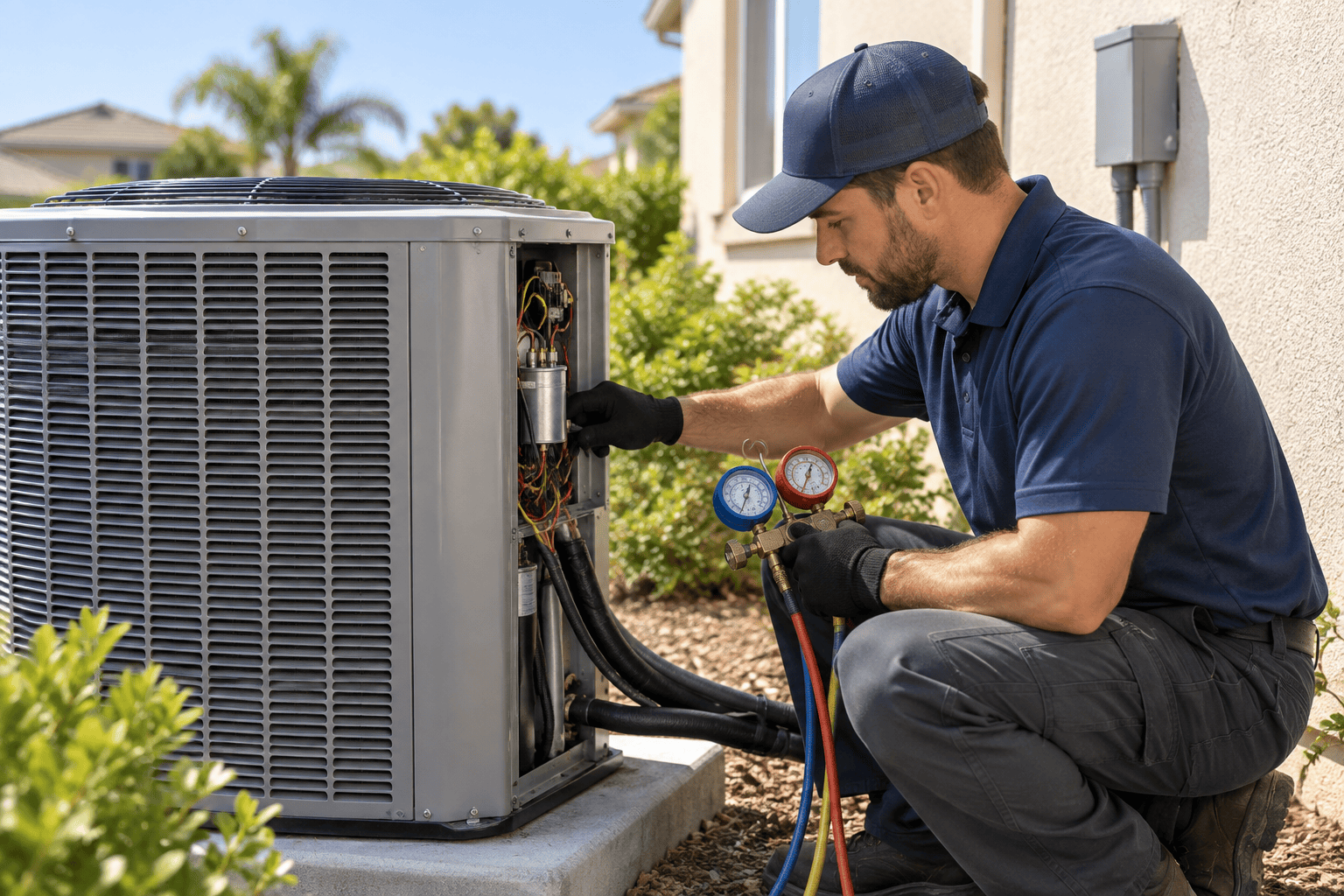
A technician can safely inspect and clean the coil while checking the fan motor, capacitor, electrical connections, refrigerant circuit, and overall system performance.
5. Conditioned Air Is Escaping Through Leaking Ductwork
Duct leaks can send cooled air into an attic, crawl space, garage, or wall cavity instead of the rooms where it is needed.
The AC may run continuously because the thermostat never receives enough conditioned air to reach the desired temperature. Leaking return ducts can also pull hot, dusty air into the HVAC system.
Possible signs of duct problems include:
- Certain rooms are consistently hotter than others
- Airflow is much weaker at distant vents
- Energy bills have increased without an obvious reason
- The home becomes dusty soon after cleaning
- The AC runs for long periods but provides limited comfort
- There are visible gaps or disconnected duct sections
Professional duct testing can determine whether air is being lost and identify areas that need sealing or repair.
6. Your AC May Be Low on Refrigerant
Air conditioners do not normally consume refrigerant. If the refrigerant level is low, the system may have a leak.
An AC with a refrigerant problem might provide some cooling during the morning but struggle when outdoor temperatures rise. Other warning signs may include warm or mildly cool air from the vents, ice on the refrigerant line, unusual hissing sounds, and unusually long cooling cycles.
Adding refrigerant without finding the cause is not a complete repair. A qualified HVAC technician should diagnose the system, locate the leak when appropriate, and recommend the correct solution.
7. The AC System May Be Improperly Sized
A system that is too small may run almost constantly during hot weather and still fail to maintain the thermostat setting.
However, installing the largest possible unit is not the answer. An oversized AC can turn on and off too quickly, create uneven temperatures, reduce humidity control, and increase wear.
Correct sizing should consider more than the home’s square footage. Windows, insulation, ceiling height, orientation, air leakage, ductwork, occupancy, and local climate conditions all affect the required capacity.
Before replacing a system, ask for a proper load calculation rather than choosing equipment based only on the size of the existing unit.
8. Your HVAC System Is Losing Capacity With Age
Older air conditioners may continue running while producing less cooling than they once did. Dirty coils, worn motors, weakened electrical components, refrigerant issues, and years of normal wear can reduce performance.
Age alone does not automatically mean the system must be replaced. A professional inspection can help compare the cost of repair with the potential comfort and efficiency benefits of new equipment.
If the AC needs frequent repairs, uses an older refrigerant, produces uneven temperatures, or cannot keep up with normal afternoon heat, replacement may be worth considering.
Why Lowering the Thermostat to 60°F Does Not Cool the House Faster
Setting the thermostat much lower usually does not make a standard residential air conditioner produce colder air or cool the home faster.
The thermostat tells the system when to run. It does not function like an accelerator pedal. Setting it to 60°F may simply cause the AC to operate longer while placing additional stress on a system that is already struggling.
Choose a reasonable temperature and focus on the cause of the cooling problem. If the indoor temperature continues rising while the AC runs, the system may need service.
Try This Simple 4 PM AC Check
The next time your home begins getting warmer in the afternoon, record:
- The thermostat setting
- The current indoor temperature
- The outdoor temperature
- Whether the AC is running continuously
- Whether airflow feels strong or weak
- Which rooms are getting warmer
- Any unusual sounds, odors, water, or ice
Also check that windows and exterior doors are closed, supply vents are open, and the air filter is clean.
This information can help an HVAC technician diagnose the problem more efficiently.
Do not open electrical panels, handle refrigerant components, or continue operating the AC if you notice burning odors, loud mechanical noises, significant water leakage, or ice buildup.
When Should You Call an HVAC Technician?
Schedule professional AC service if:
- The indoor temperature continues rising while the system runs
- The AC cannot reach the thermostat setting under normal weather conditions
- Airflow from the vents is weak
- Some rooms are significantly hotter than others
- The system repeatedly turns on and off
- You see ice on the indoor coil or refrigerant line
- The AC is blowing warm air
- Energy bills have increased unexpectedly
- The system makes unusual sounds or produces burning odors
- The same late-afternoon cooling problem happens every day
A technician can evaluate airflow, temperature differences, electrical components, refrigerant pressures, coils, ductwork, thermostat operation, and overall system capacity.
Stay Comfortable During the Hottest Part of the Day
If your Los Angeles-area home gets hotter every afternoon, do not assume it is simply something you have to live with. The cause may be as simple as a dirty filter, but it could also involve leaking ducts, poor airflow, a refrigerant problem, or an aging AC system.
Cooling & Heating Repair provides professional air conditioning diagnostics, repairs, maintenance, and system replacement throughout Los Angeles and surrounding areas.
Contact Cooling & Heating Repair today to schedule AC service and find out why your system is not keeping up with the afternoon heat.
Frequently Asked Questions
Is it normal for an AC to run continuously on a very hot day?
Longer cooling cycles can be normal during extreme heat. However, the indoor temperature should not continue increasing significantly. If the AC cannot maintain a reasonable temperature, it may have an airflow, maintenance, ductwork, refrigerant, sizing, or equipment problem.
How many degrees should an AC cool a house?
Air-conditioning performance should be evaluated using system measurements and current indoor and outdoor conditions. The thermostat setting alone does not show whether the equipment is working correctly. An HVAC technician can measure the temperature and airflow at the system to determine whether it is operating properly.
Why is one room hotter in the afternoon?
The room may receive more direct sunlight or have inadequate insulation. Restricted vents, duct leaks, poor airflow balance, and insufficient return air can also cause uneven temperatures.
Should I turn off the AC if I see ice?
Yes. Continuing to run a frozen system can worsen the problem. Turn off cooling and contact an HVAC technician. A dirty filter may contribute to freezing, but refrigerant and airflow issues should also be checked.
Can AC maintenance prevent afternoon cooling problems?
Routine maintenance can improve system reliability and identify dirty coils, restricted airflow, worn components, and other developing issues before the hottest weather arrives. However, insulation, ductwork, sizing, and building-related problems may require additional solutions.