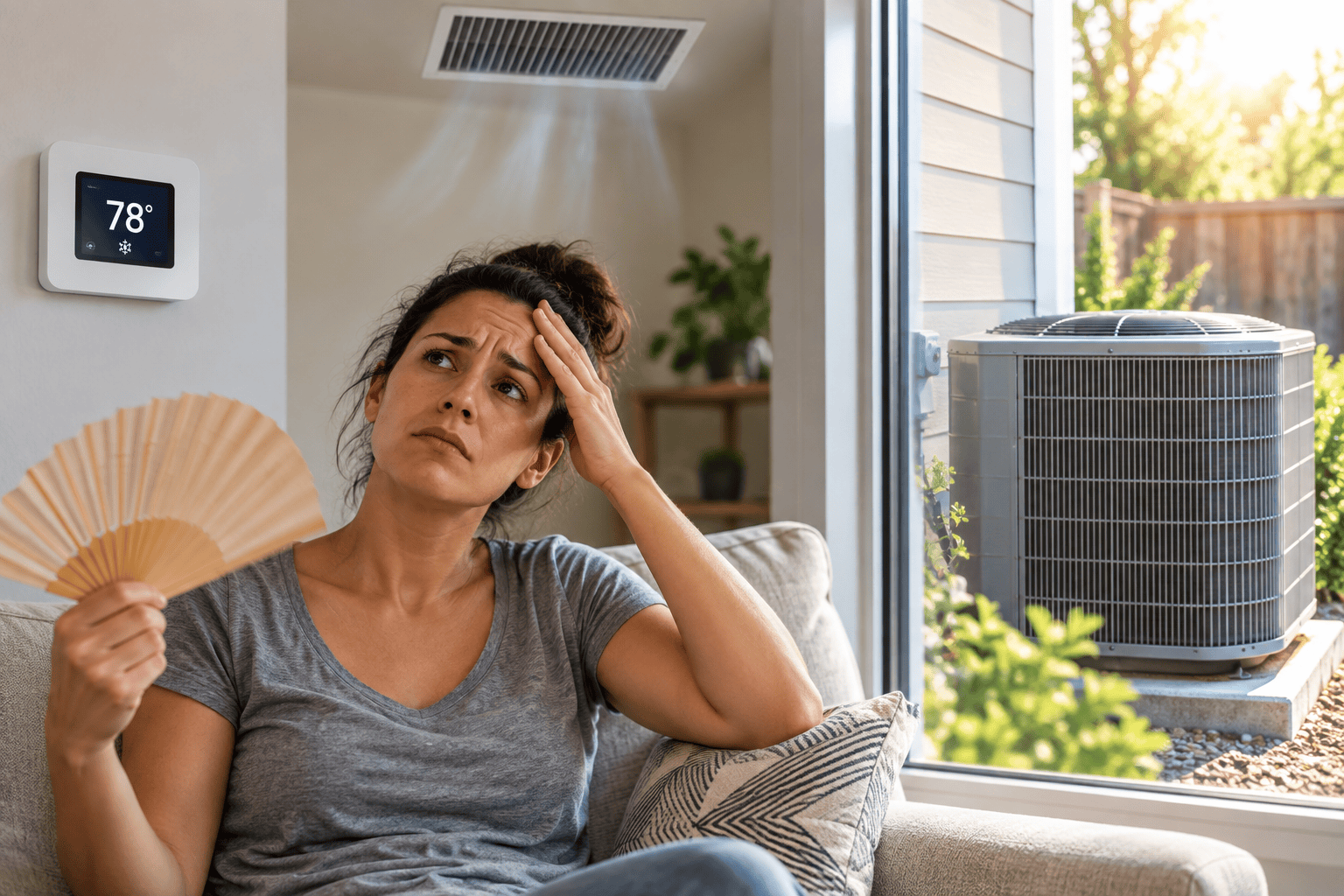
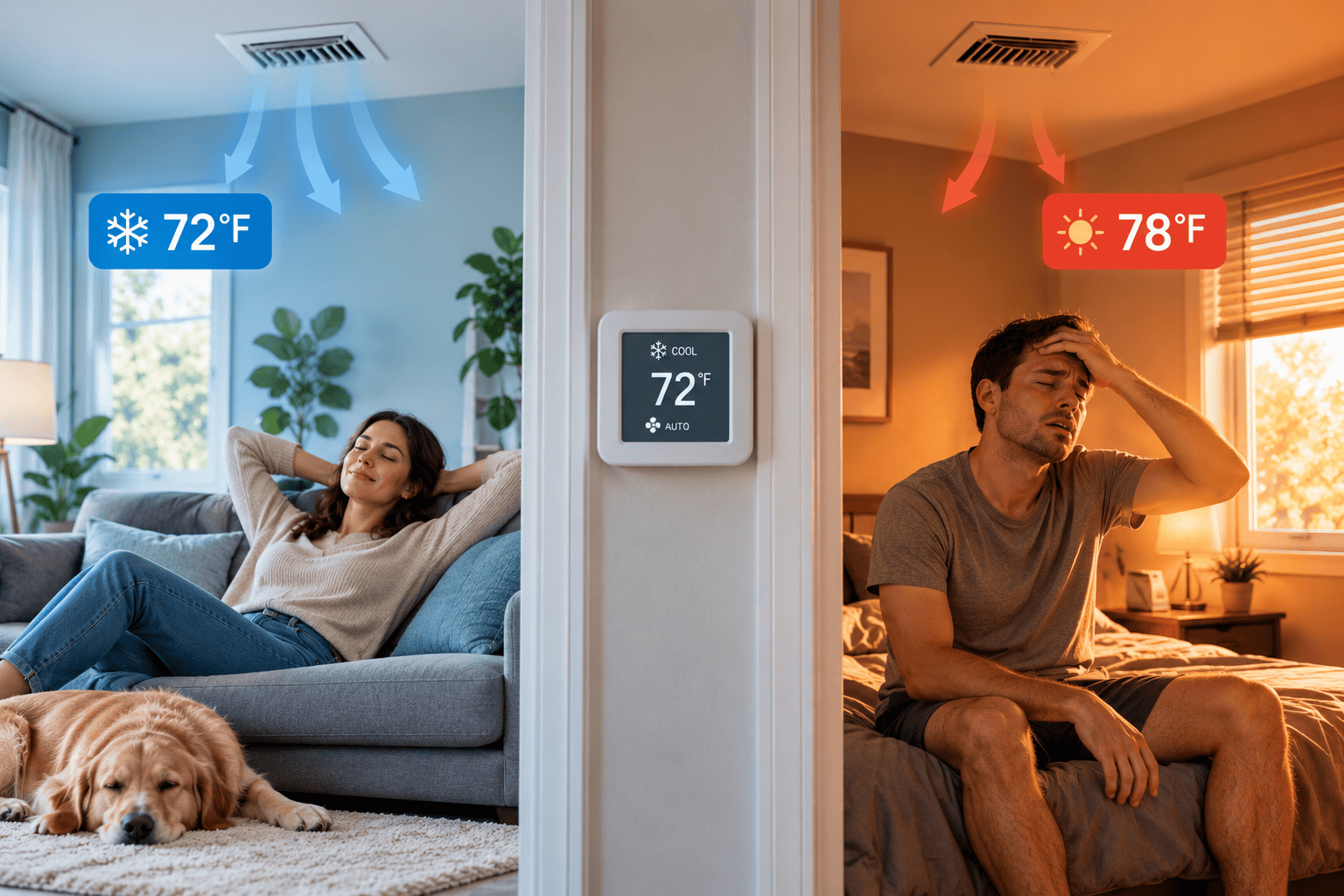
Your central AC is running. Most of the house feels comfortable. But one bedroom, office, or upstairs room always seems noticeably warmer than everywhere else.
It’s a common problem — and turning the thermostat lower isn’t necessarily the solution.
When one room stays hot while the rest of the house cools normally, the issue is often related to airflow, ductwork, heat gain, or the way the AC system distributes conditioned air throughout the home.
Here are some of the most common reasons it happens.
1. The Room Isn’t Getting Enough Airflow
Start with the simplest possibility: not enough conditioned air is reaching the room.
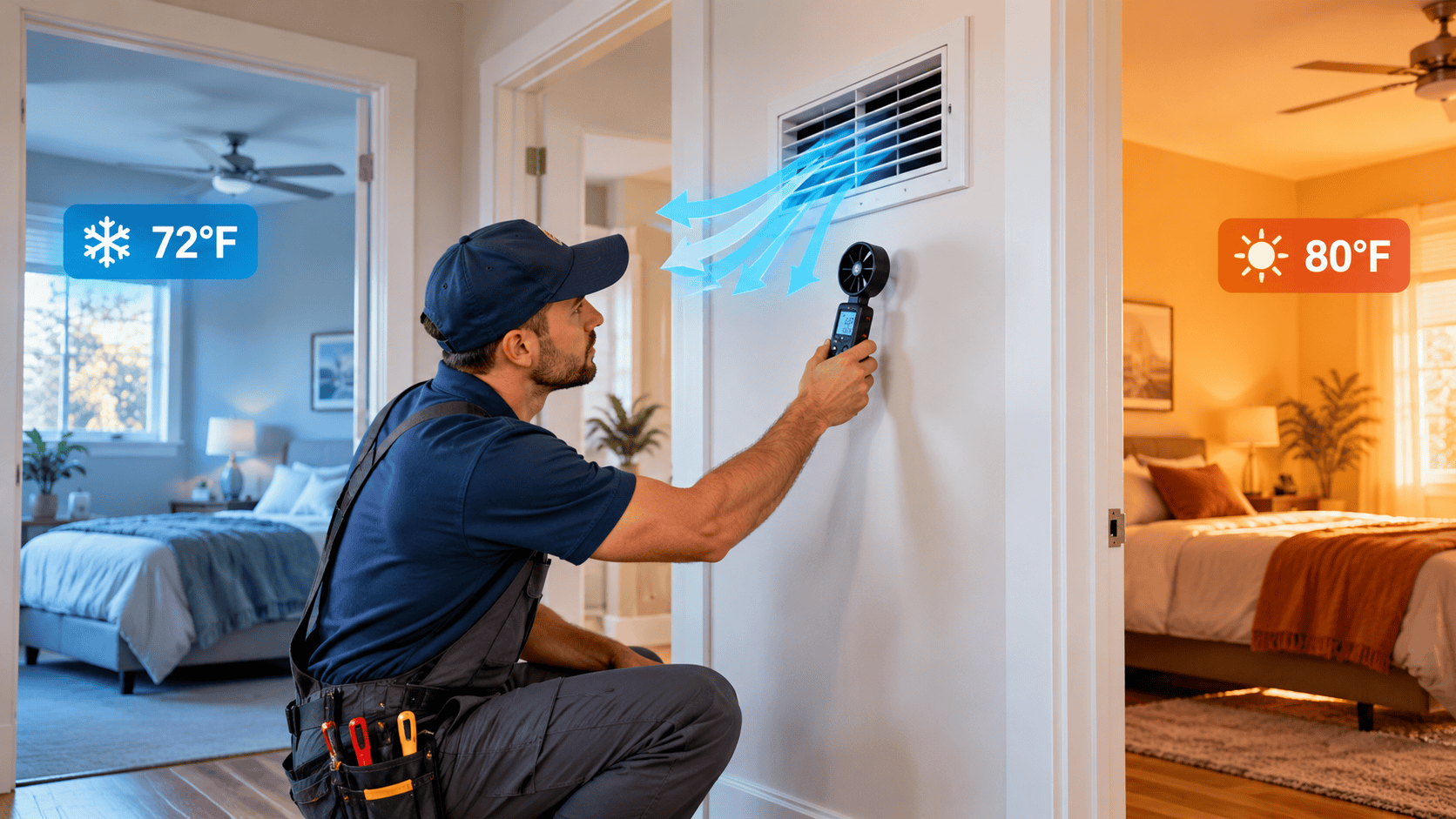
Place your hand near the supply vent while the AC is running and compare the airflow with vents in other rooms.
If the airflow feels significantly weaker, there may be a restriction somewhere in the system.
Possible causes include:
- A partially closed vent
- Furniture blocking the register
- A dirty air filter
- Restricted ductwork
- A disconnected or damaged duct
- Improper system balancing
Opening the vent completely and removing anything blocking it is an easy first step.
If airflow remains weak, the problem may be deeper inside the system.
2. There Could Be a Problem With the Ductwork
Central AC depends on ductwork to deliver cooled air throughout your home.
If a duct serving one particular room becomes damaged, disconnected, crushed, or develops significant leakage, much of that conditioned air may never reach the room.
This can be especially problematic when ducts run through hot spaces such as an attic.
Instead of cooling the bedroom, some of the conditioned air may be escaping before it reaches the vent.
Common signs include weak airflow, uneven temperatures, or a room that takes much longer to cool than the rest of the house.
3. The Room Gets More Sunlight
Sometimes the AC isn’t the main problem.
Rooms with large windows or significant afternoon sun exposure can gain considerably more heat than other parts of the house.
You may notice that the room is comfortable in the morning but becomes increasingly warm later in the afternoon.
West-facing rooms can be particularly affected because they receive strong afternoon sunlight.
Curtains, blinds, window coverings, and improvements to window efficiency can sometimes reduce this additional heat load.
But if the temperature difference is significant, airflow and system performance should also be evaluated.
4. The Room Is Above a Garage
Bedrooms located above garages often behave differently from other rooms.
The garage can become extremely hot, and that heat can transfer through the ceiling and floor structure into the room above.
Insulation quality becomes particularly important in these areas.
If one upstairs bedroom is consistently warmer and it happens to be located directly above the garage, the building structure may be contributing to the comfort problem.
5. It’s an Upstairs Room
Heat naturally tends to accumulate on upper levels, which is why two-story homes frequently experience temperature differences between floors.
During hot weather, the upstairs AC load can be considerably higher.
Several factors can make the problem worse:
- Attic heat
- Insufficient insulation
- Air leakage
- Poor airflow
- Duct leakage
- Inadequate return airflow
If the entire second floor is warmer rather than just one room, the issue may involve overall system balancing rather than a single vent or duct.
6. The Room May Not Have Enough Return Air
Supply vents deliver conditioned air into a room.
But that air also needs a way to circulate back toward the HVAC system.
If a bedroom has limited return airflow — particularly when the door is closed — pressure differences can interfere with normal air circulation.
The room may receive cooled air but struggle to move warmer air out effectively.
This is one reason some rooms feel noticeably different when their doors remain closed for long periods.
An HVAC technician can evaluate whether the home’s supply and return airflow are properly balanced.
7. Your Air Filter Could Be Restricting Airflow
A dirty filter doesn’t always make the entire AC system stop working.
Sometimes the first noticeable symptom is weaker airflow in rooms located farther from the indoor unit.
As airflow becomes restricted, rooms with shorter or more direct duct runs may still feel comfortable while distant rooms become warmer.
Checking the air filter is one of the easiest things homeowners can do before scheduling service.
If it’s heavily clogged, replace it with the appropriate filter for your system.
8. The AC System May Be Improperly Balanced
Central AC systems don’t necessarily need to deliver exactly the same amount of air to every room.
Different rooms have different cooling requirements depending on their size, windows, orientation, location, insulation, and other factors.
HVAC systems can use dampers and other methods to distribute airflow appropriately.
If the system wasn’t balanced correctly — or something has changed since installation — certain rooms may receive too much conditioned air while others receive too little.
Professional airflow measurements can help identify these differences.
9. The Room Has a Higher Cooling Load
Consider what is actually inside the warmer room.
A home office containing multiple computers, monitors, and electronics can produce considerably more heat than an unused bedroom.
Large windows, high ceilings, multiple occupants, poor insulation, and exterior walls can also increase the cooling requirement.
This becomes important when determining whether the problem is the AC equipment or simply insufficient cooling capacity for that particular space.
Should You Close Vents in Other Rooms?
It can be tempting to close several vents elsewhere in the house to force more cold air into the hot room.
That’s not always a good idea.
A central HVAC system is designed to operate with a certain amount of airflow.
Closing too many supply vents can change system pressure and may create additional airflow problems instead of solving the original issue.
If your home needs significant airflow adjustments, it’s better to determine why the imbalance exists.
What Can You Check Yourself?
Before calling an AC technician, try a few simple checks:
- Make sure the room’s supply vent is completely open.
- Remove furniture, curtains, or objects blocking the vent.
- Compare airflow with other rooms.
- Check the AC air filter.
- Notice whether the problem changes when the bedroom door is open.
- Pay attention to what time of day the room becomes hottest.
- Check whether the room receives significant direct sunlight.
These observations can also help a technician diagnose the problem more efficiently.
When Is It Time for an AC Inspection?
If one room remains significantly warmer despite having an open and unobstructed vent, the system may need further evaluation.
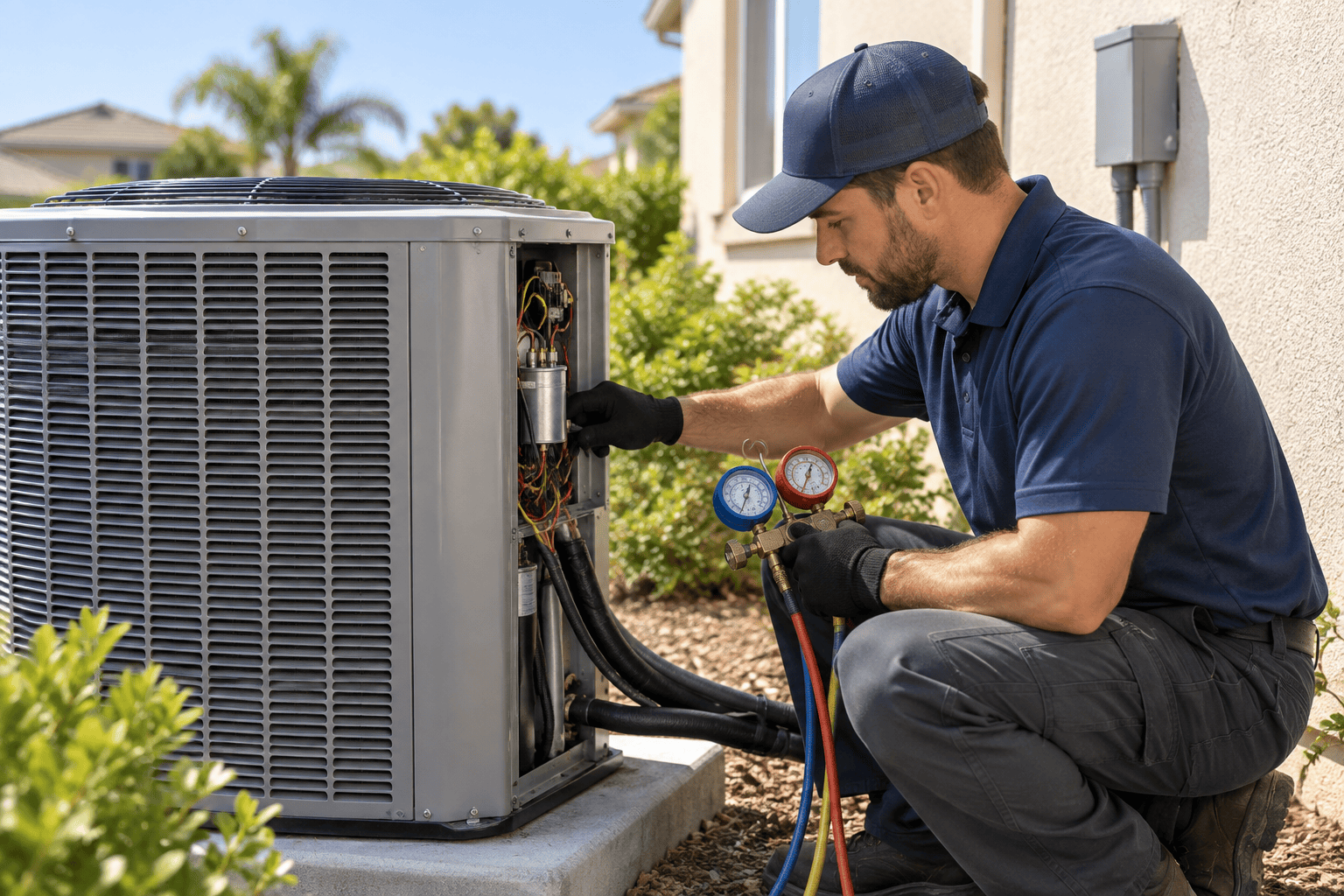
An HVAC technician can check airflow, ductwork, temperature differences, system operation, and other factors that aren’t easily evaluated by a homeowner.
The solution depends on the actual cause.
Sometimes it’s a relatively straightforward airflow problem. Other situations may involve ductwork, insulation, system balancing, or the overall design of the cooling system.
Frequently Asked Questions
Why is one bedroom hotter than the rest of my house?
The room may have insufficient airflow, duct leakage, more sunlight, inadequate return airflow, higher heat gain, or an HVAC balancing problem.
Why is my upstairs hotter even with the AC on?
Upper floors often experience greater heat gain from the roof and attic. Airflow, ductwork, insulation, and HVAC system balancing can also contribute to the temperature difference.
Can a blocked AC vent make a room hotter?
Yes. Furniture, curtains, or other objects blocking a supply vent can significantly reduce the amount of conditioned air entering the room.
Why is there barely any air coming from one AC vent?
Weak airflow from a single vent can be associated with a closed damper, duct restriction, duct damage, leakage, or another airflow problem.
Should I close AC vents in cold rooms?
Closing several vents isn’t usually the best way to correct major temperature differences. It can affect airflow and pressure within the HVAC system. The underlying reason for the imbalance should be identified instead.
Get More Consistent Cooling Throughout Your Home
You shouldn’t have to make the entire house freezing cold just to make one bedroom comfortable.
If your central AC cools most of your home but one or more rooms remain noticeably warmer, Cooling & Heating Repair can help identify what’s causing the temperature difference.
Our technicians can evaluate your central AC system, airflow, and ductwork to determine why conditioned air isn’t being distributed properly throughout your home.