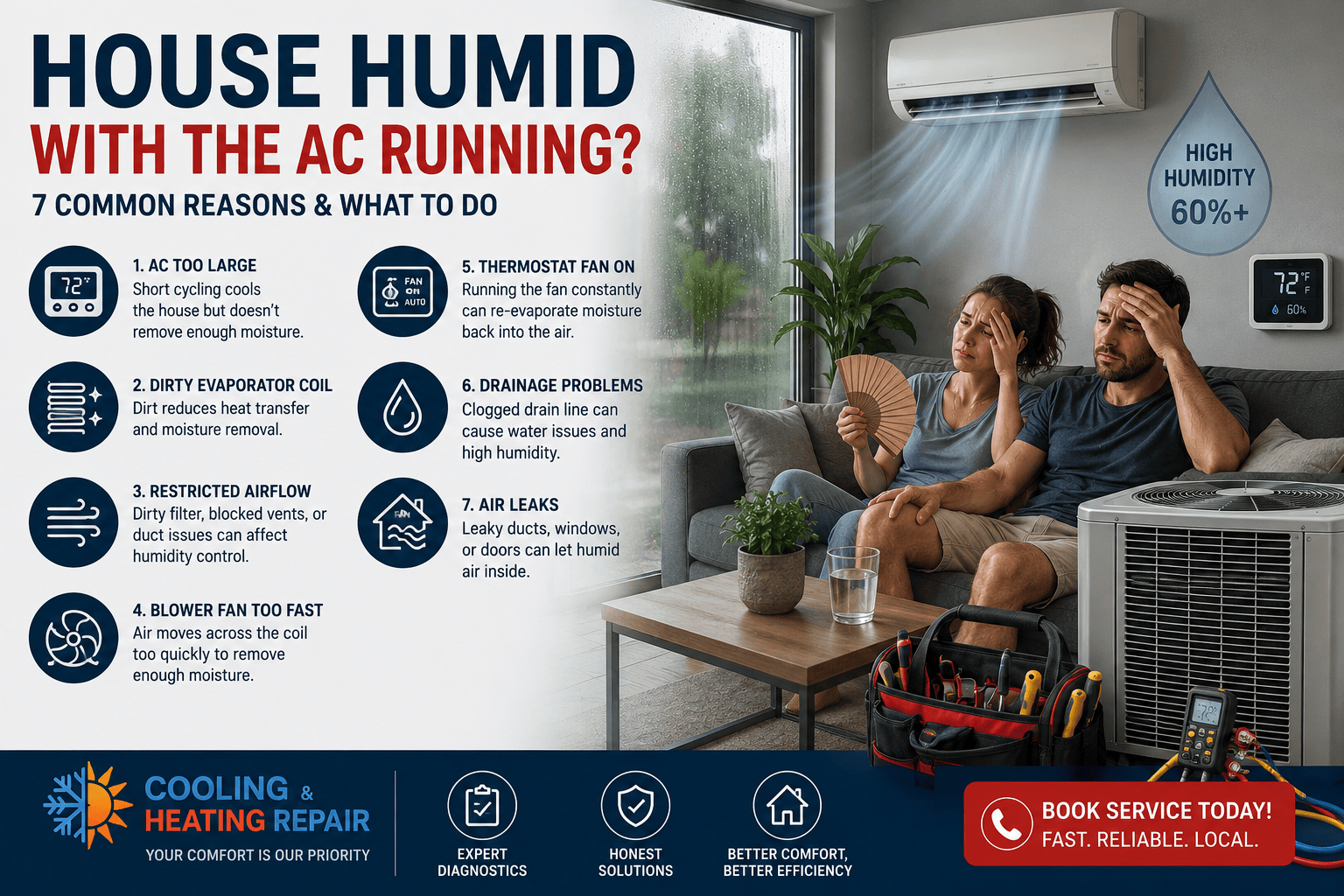
Your air conditioner is running. The thermostat shows a comfortable temperature. But something still doesn’t feel right.
The air feels sticky. Some rooms feel stuffy. You may notice condensation around vents or windows, or the house simply doesn’t feel as comfortable as it should.
This is a common problem — and lowering the thermostat isn’t always the solution.
Your air conditioning system doesn’t just cool your home. It also helps remove moisture from the indoor air. When something interferes with that process, your AC may continue running while humidity inside the home remains too high.
Here are some of the most common reasons this happens.
1. Your AC May Be Too Large for Your Home
It might sound strange, but a bigger air conditioner isn’t necessarily better.
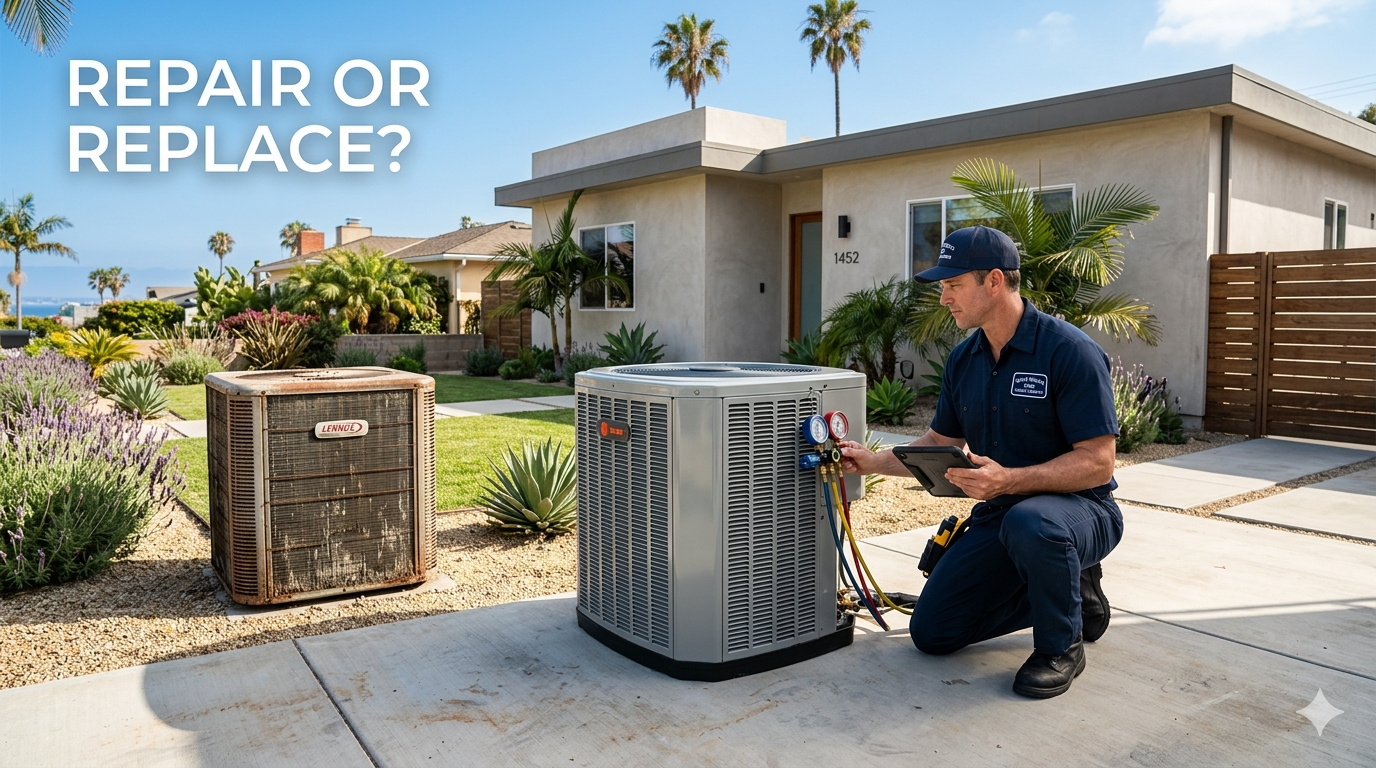
An oversized AC can cool the house very quickly and then shut off before it has had enough time to properly remove moisture from the air.
This is known as short cycling.
The thermostat may reach the desired temperature, but indoor humidity can remain high.
Proper HVAC sizing should consider much more than square footage. Insulation, windows, ceiling height, sun exposure, ductwork, orientation of the home, and other factors can all affect the cooling load.
That’s why professional load calculations are important when replacing an HVAC system.
2. Dirty Evaporator Coil
The evaporator coil is responsible for absorbing heat from the indoor air.
As warm air passes over the cold coil, moisture also condenses on its surface and drains away.
If the coil becomes dirty, heat transfer and moisture removal can become less effective.
You may notice:
- Longer cooling cycles
- Reduced airflow
- Higher indoor humidity
- Increased energy consumption
- AC struggling during hotter parts of the day
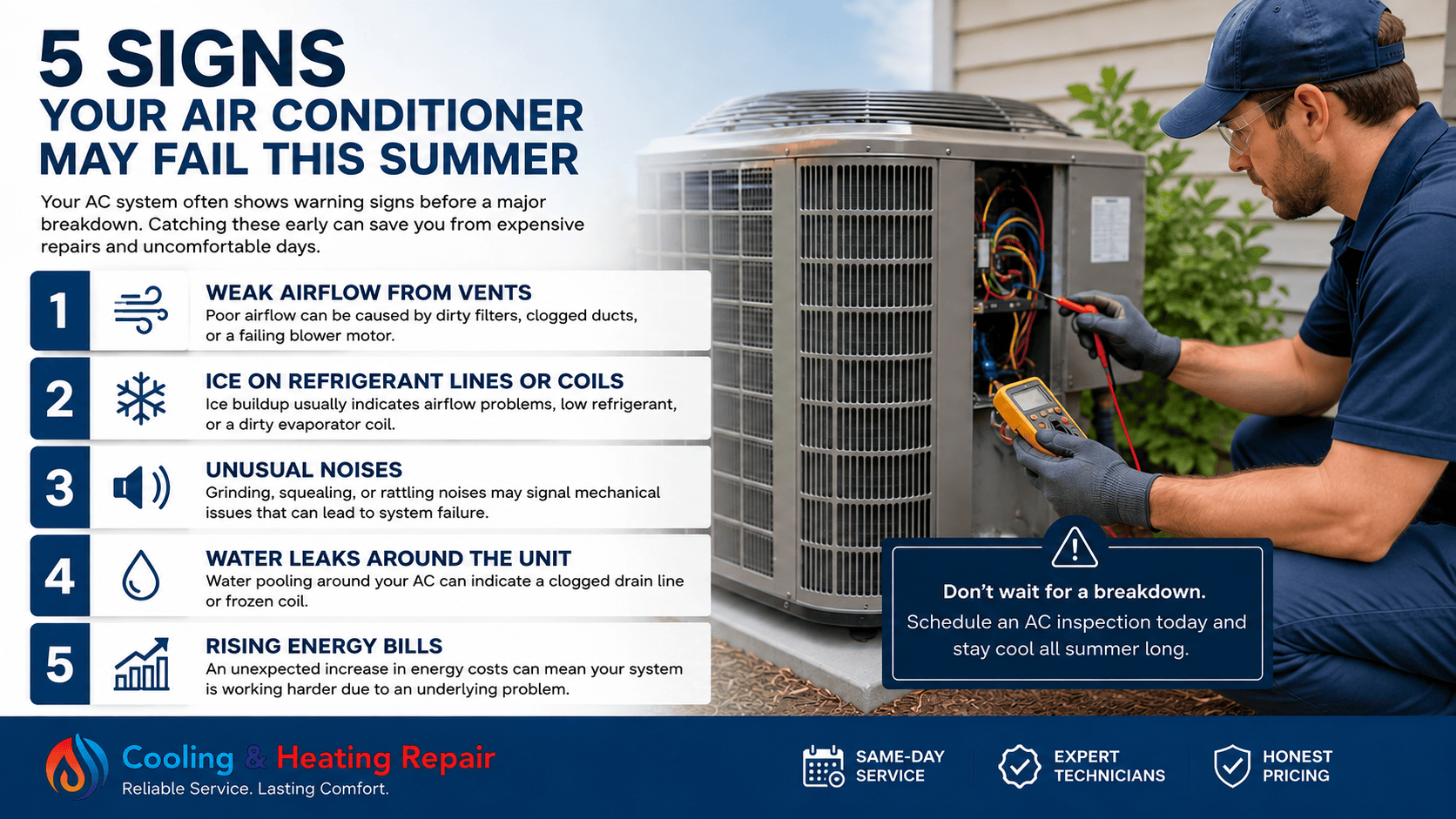
Regular HVAC maintenance can help identify dirty coils before they significantly affect system performance.
3. Restricted Airflow
Your AC needs proper airflow to operate correctly.
A dirty filter is one of the most common causes of restricted airflow, but it isn’t the only possibility.
Problems can also include blocked return vents, dirty blower components, damaged ductwork, incorrect fan settings, or other airflow restrictions.
If airflow isn’t correct, both cooling performance and humidity control may suffer.
Before assuming there’s a major AC problem, check that your air filter is clean and that supply and return vents aren’t blocked by furniture or other objects.
4. The Blower Fan May Be Running Too Fast
Air needs enough contact time with the cold evaporator coil for moisture to condense effectively.
If the blower speed is incorrectly configured, air may move across the coil too quickly.
The home may still cool, but the system may remove less moisture than expected.
Fan speed should be configured according to the HVAC system, equipment specifications, and application.
This is something an HVAC technician can check during a system diagnosis.
5. Your Thermostat Fan Is Set to “ON”
Take a look at your thermostat.
If the fan setting is ON instead of AUTO, the blower may continue circulating air even after the outdoor AC unit stops cooling.
Why does that matter?
Moisture remaining on the evaporator coil after a cooling cycle can potentially evaporate back into the air as the fan continues running.
For many residential systems, using the AUTO setting is preferable because the blower operates with the cooling cycle instead of continuously.
6. There Could Be a Drainage Problem
Your AC removes moisture from indoor air and sends the resulting condensation through a drain line.
If the condensate drain becomes partially or completely clogged, water may accumulate around the system.
Possible warning signs include:
- Water near the indoor HVAC unit
- Full drain pan
- Musty odors
- AC shutting off unexpectedly
- Water stains near the equipment
Drainage problems should be addressed quickly because they can potentially cause water damage in addition to HVAC problems.
7. Air Leaks Can Bring Humid Outdoor Air Inside
Sometimes the AC itself isn’t the only problem.
Air leaks around doors, windows, attic penetrations, ductwork, or other parts of the building envelope can continuously introduce warm outdoor air into the home.
Your air conditioner then has to cool and dehumidify that additional air.
Leaking ductwork can be especially problematic when ducts run through hot attics or other unconditioned spaces.
What Indoor Humidity Should You Aim For?
Many homes feel comfortable when relative humidity is roughly 30% to 50%, although the ideal level can vary depending on outdoor conditions, the home, and personal preference.
Consistently high humidity can make a home feel warmer than the thermostat temperature suggests.
This is one reason homeowners sometimes keep lowering the thermostat even though the actual problem isn’t temperature — it’s moisture.
Don’t Automatically Lower the Thermostat
If your house feels humid, setting the thermostat several degrees colder may temporarily make the space feel better.
But it doesn’t identify the cause.
Instead, pay attention to how the system operates.
Does the AC turn on and off frequently?
Does it run constantly?
Is airflow weak?
Are some rooms more humid than others?
Is there condensation where you didn’t notice it before?
These details can help an HVAC technician diagnose the problem faster.
When Should You Call an HVAC Professional?
Consider having your system inspected if high indoor humidity continues despite normal AC operation.
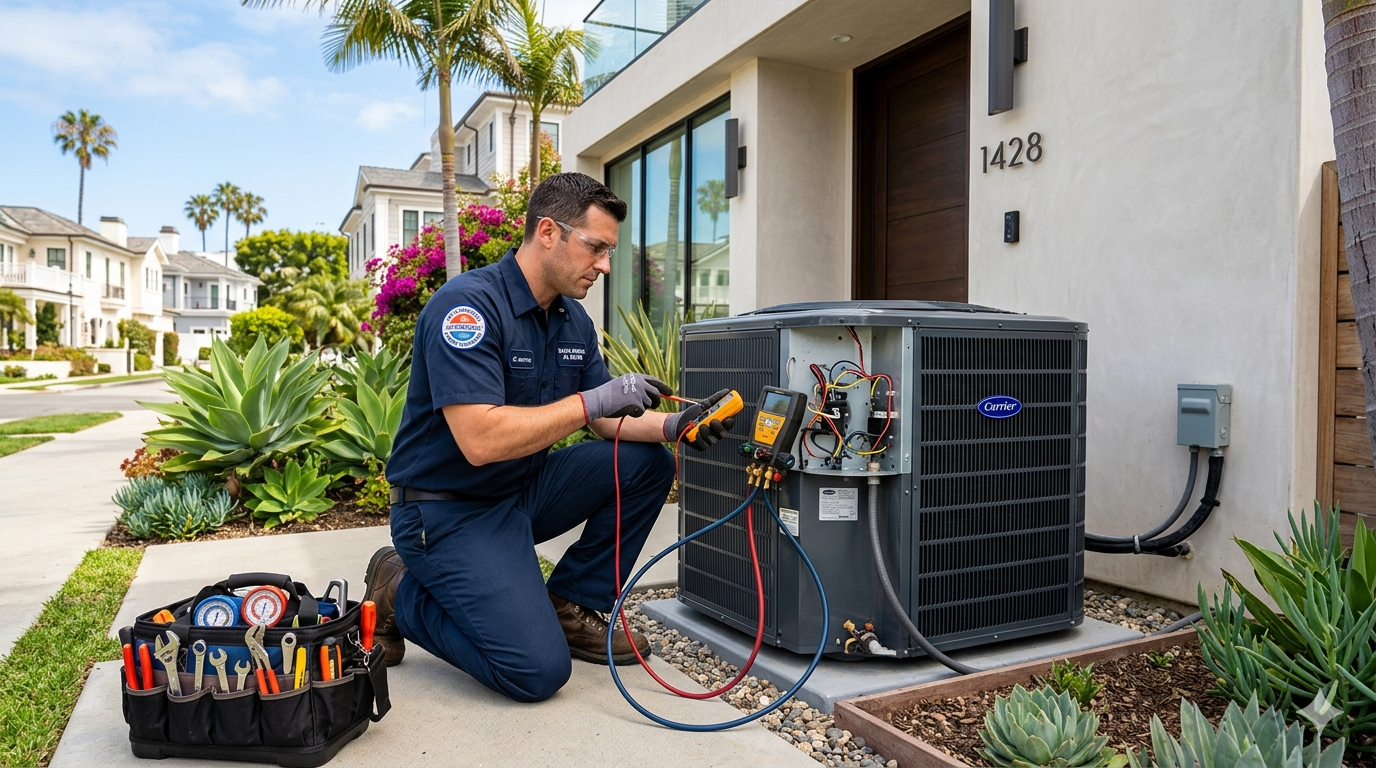
A technician can check important factors such as:
- Airflow
- Evaporator coil condition
- Blower operation
- Refrigerant performance
- Condensate drainage
- Thermostat configuration
- Ductwork
- Overall system operation
The goal isn’t simply to make the air colder.
A properly operating HVAC system should help maintain a comfortable indoor environment while operating efficiently.
AC Diagnostics & Repair in Southern California
If your AC is running but your home still feels humid, uncomfortable, or unusually warm, Cooling & Heating Repair can help determine what’s causing the problem.
Our technicians provide professional AC diagnostics, repair, maintenance, and system replacement throughout Southern California.
Instead of guessing which component is causing the issue, we can inspect the system, explain what we find, and recommend the appropriate solution.
Your AC shouldn’t just make your home colder — it should make your home comfortable.
Contact Cooling & Heating Repair to schedule professional AC service.