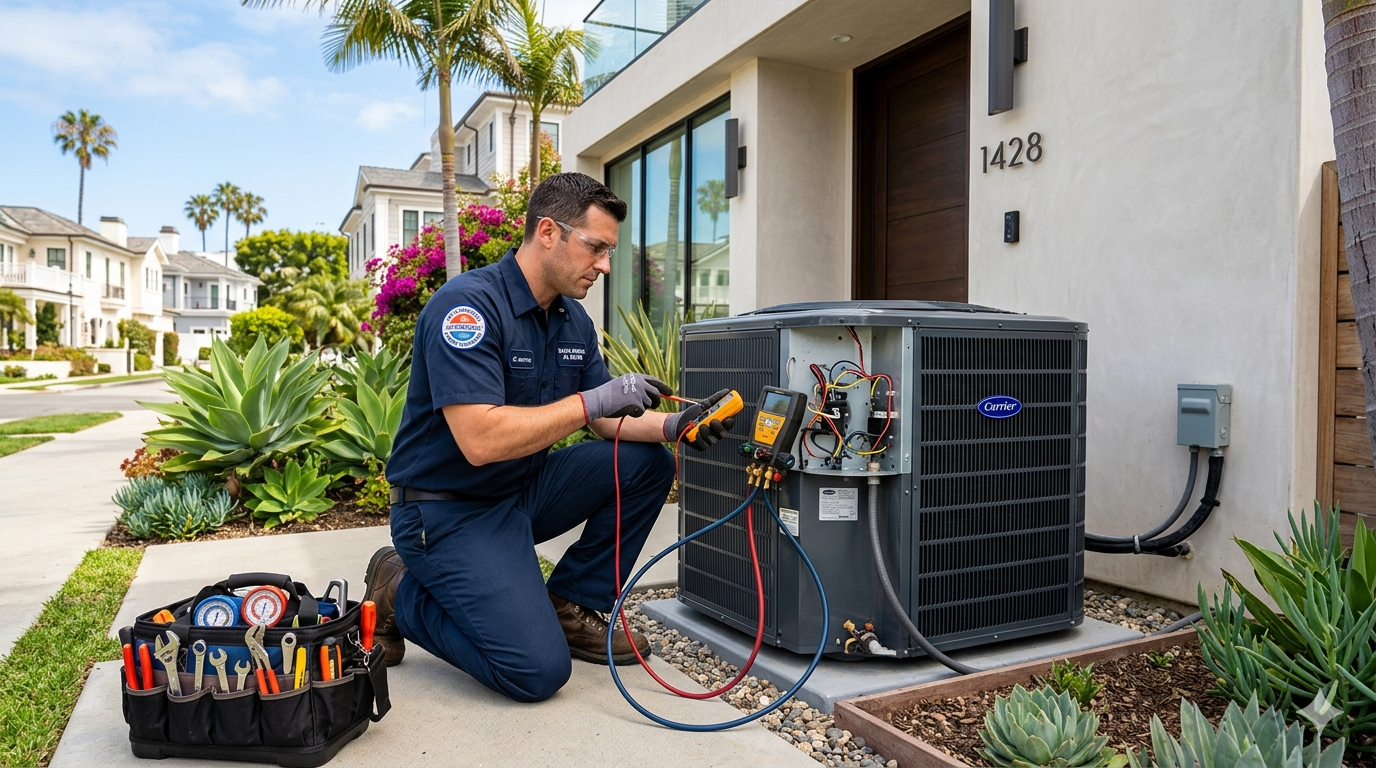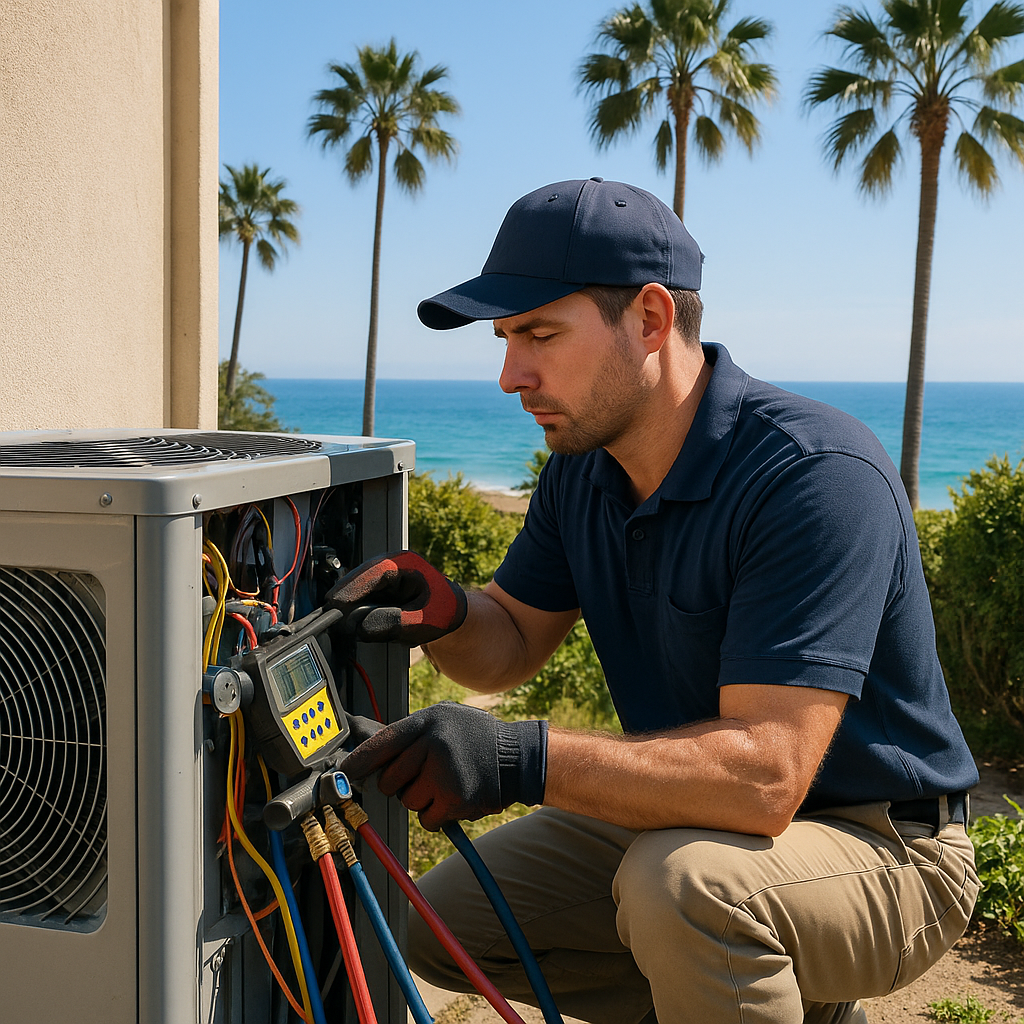
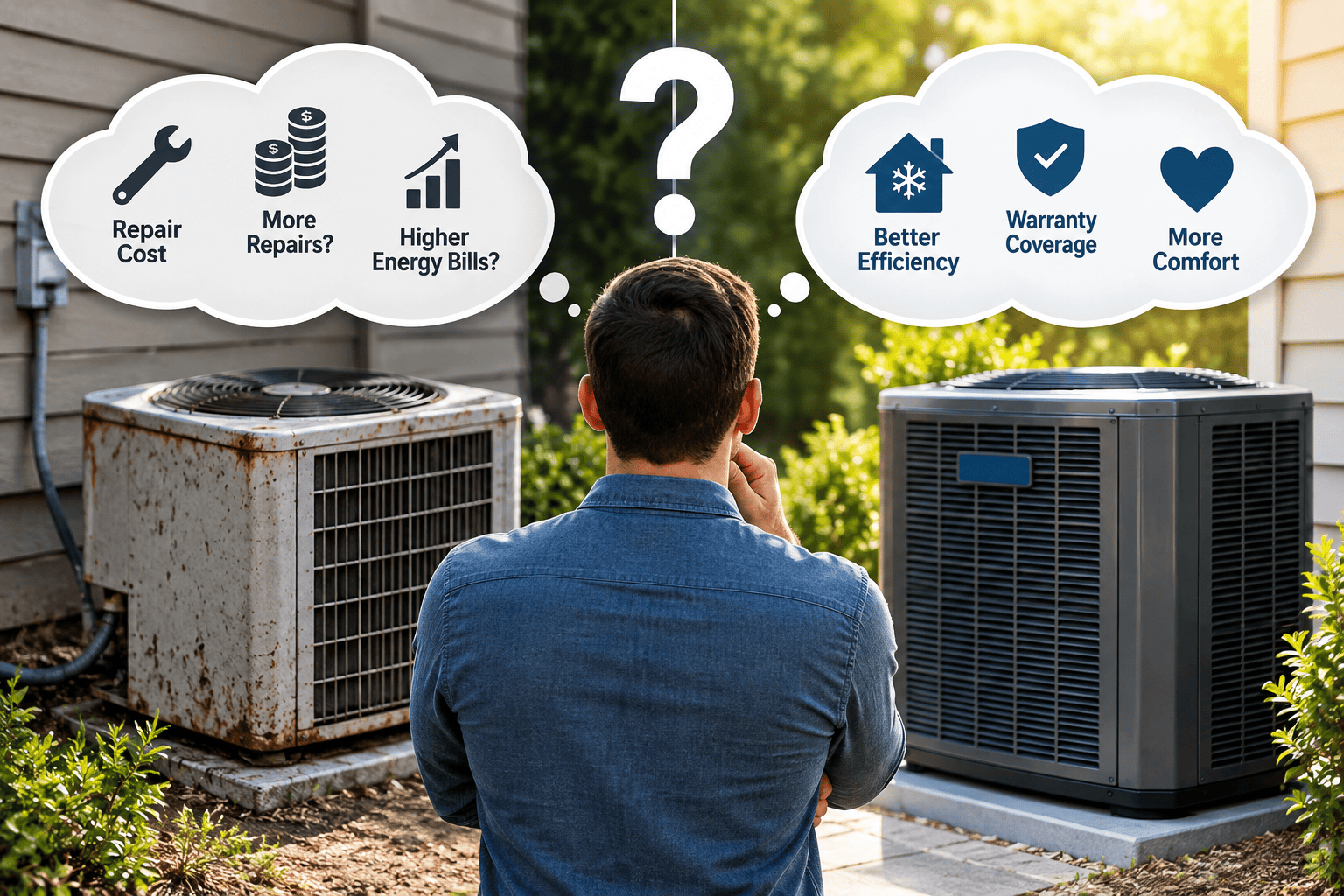
When an air conditioner stops working, the first question is usually simple: How much will it cost to fix?
But the price of today’s repair isn’t always the number that matters most.
An older AC system may be repairable for a few hundred dollars and still become the more expensive option over the next several years. On the other hand, replacing a system simply because it is getting older doesn’t always make financial sense either.
The better question is:
What is this AC system likely to cost me over the next three to five years?
Looking beyond the immediate repair bill can make the repair-versus-replacement decision much clearer.
1. One Repair Isn’t the Same as a Pattern of Repairs
Almost every air conditioning system will need a repair at some point. A single failed capacitor, contactor, sensor, or other component doesn’t automatically mean the entire system should be replaced.
The situation changes when repairs become frequent.
Imagine spending $500 on a repair this summer, another $800 next year, and then facing a major component failure after that. Each individual repair may have seemed reasonable at the time, but together they can represent a significant investment in an aging system.
This is why homeowners should look at the repair history, not just the current estimate.
Ask yourself:
- How many repairs has the system needed during the last two or three years?
- Are the repairs becoming more expensive?
- Have multiple major components already been replaced?
- Does the system still perform reliably after those repairs?
A system that repeatedly requires service may be approaching the point where continued repairs offer diminishing value.
2. The Repair Bill Doesn’t Include Higher Electricity Usage
Two AC systems can cool the same home while consuming very different amounts of electricity.
As equipment ages, several factors can reduce its real-world efficiency. Components wear, coils become harder to keep performing at their original level, motors age, and the system may run longer to maintain the desired indoor temperature.
That extra runtime matters.
Suppose an older system still cools the house but runs significantly longer during hot afternoons. There may be no obvious breakdown, yet the homeowner can be paying the difference every month through higher electricity bills.
When comparing repair and replacement, consider both:
Immediate cost:
What will today’s repair cost?
Operating cost:
What will it cost to run the system for another three to five years?
A cheaper repair isn’t necessarily cheaper overall if it keeps an inefficient system operating for several more summers.
3. Major Component Failures Change the Equation
Not all AC repairs should be evaluated the same way.
Replacing a relatively inexpensive electrical component is very different from dealing with a failed compressor or another major part of the system.
When a major repair is needed, compare the repair estimate against:
- the age of the equipment;
- its overall condition;
- previous repair history;
- expected remaining service life;
- efficiency;
- warranty coverage;
- the cost of a suitable replacement system.
The important point isn’t that a major failure automatically means replacement.
It means the decision deserves a whole-system evaluation instead of looking at the failed component in isolation.
4. Refrigerant Can Become Part of the Cost
Refrigerant is another factor homeowners sometimes overlook.
Older systems may use refrigerants that are being phased out or have become more expensive and less convenient to obtain. If an aging system develops a refrigerant leak, simply adding refrigerant may not address the underlying problem.
The technician should determine why refrigerant was lost.
If the system has a significant leak and also requires other expensive repairs, investing additional money into the equipment may become difficult to justify.
Homeowners should ask:
What refrigerant does my system use, where is the leak, and what is the long-term repair plan?
That provides much more useful information than simply asking how much a recharge costs.
5. Don’t Forget About Component Compatibility
An air conditioning system isn’t one machine operating independently.
The outdoor unit, indoor coil, blower, controls, ductwork, electrical components, and other parts work together as a system.
This becomes important when major equipment is replaced.
Installing one new component while keeping another significantly older component may create compatibility or performance limitations. Depending on the equipment, it can also affect efficiency and warranty considerations.
Before approving a partial replacement, ask whether the proposed components are properly matched.
A lower initial estimate isn’t particularly valuable if the combination creates another expensive problem later.
6. Warranty Coverage Can Completely Change the Decision
Two homeowners with the same failed component may face very different repair costs.
Why?
One system may still have manufacturer parts coverage while the other doesn’t.
Before making a repair-versus-replacement decision, verify:
- whether the equipment is still under warranty;
- which components are covered;
- whether labor is included;
- whether registration was required;
- whether previous ownership affects coverage.
A repair that seems expensive at first may become reasonable if a major component is covered.
Likewise, homeowners considering a new system should understand exactly what the new warranty includes instead of assuming that every future expense will be covered.
7. Comfort Problems Have a Cost Too
The decision shouldn’t be based entirely on whether the AC technically turns on.
Consider how the home actually feels.
Does one part of the house stay significantly warmer than another? Does the system run for long periods without reaching the thermostat setting? Is humidity uncomfortable? Is the equipment unusually noisy?
Some of these problems can be caused by issues outside the AC equipment itself, including ductwork or airflow problems.
That’s why replacing equipment without diagnosing the entire system can be a mistake.
A new AC connected to an existing airflow problem may still leave the homeowner dissatisfied.
8. Oversized Equipment Isn’t an Upgrade
Homeowners sometimes assume that replacing an old system with a larger one will improve cooling.
Bigger isn’t automatically better.
AC equipment should be selected according to the cooling requirements of the home. An oversized system may cycle differently than intended and can create comfort and humidity issues.
A replacement is an opportunity to reconsider whether the existing equipment was correctly sized in the first place.
Factors such as the home’s size, insulation, windows, sun exposure, layout, and other characteristics can influence cooling requirements.
The goal should be the right system, not simply a larger system.
9. Consider the Cost of an Emergency Replacement
There’s another hidden cost that doesn’t appear on a repair estimate: timing.
A system that fails completely during a major heat wave can put homeowners in a difficult position. Suddenly, there may be less time to compare equipment, review estimates, consider financing, or schedule installation conveniently.
This doesn’t mean an older working AC should automatically be replaced.
But if the system already has multiple warning signs—frequent repairs, declining performance, major component problems, and high operating costs—planning a replacement before complete failure can provide more control over the decision.
A Better Way to Compare Repair and Replacement
Instead of asking only, “Which option costs less today?”, compare the likely cost of both choices over several years.
For the repair option, consider:
Current repair + likely future repairs + estimated operating cost
For replacement, consider:
Installation cost + estimated operating cost – applicable warranty value or other savings
No calculation can predict every future failure, but this approach gives homeowners a much more realistic basis for making a decision.
When Repair Can Still Make Sense
AC repair may be reasonable when the system is otherwise in good condition, the problem is isolated, repair history is limited, and the expected remaining service life is still substantial.
The age of the system alone shouldn’t determine the answer.
A properly diagnosed older system with a relatively minor problem may continue operating reliably.
When Replacement Deserves Serious Consideration
Replacement becomes increasingly worth evaluating when several factors occur together:
- repeated repairs;
- a major component failure;
- poor cooling performance;
- unusually high operating costs;
- refrigerant-related complications;
- significant comfort problems;
- little or no useful warranty coverage;
- other components approaching the end of their service life.
No single item automatically means an AC must be replaced. It’s the combination of factors that matters.
Get the Numbers Before Making the Decision
When your AC needs an expensive repair, don’t make the decision based only on today’s invoice.
Ask for a clear diagnosis and compare the condition of the entire system, repair history, warranty coverage, efficiency, compatibility, and likely future expenses.
Cooling & Heating Repair can inspect your central AC system, identify the actual problem, and explain the available repair or replacement options before work begins.
If your AC isn’t cooling properly or you’re deciding whether another repair is worth the investment, schedule an inspection and get the information you need to make an informed decision.
Frequently Asked Questions
Is it worth repairing an old AC system?
Sometimes. Age should be considered together with the type of failure, repair history, overall condition, efficiency, and cost of the proposed repair. An older system with a minor isolated problem can still be worth repairing.
Does a high repair estimate mean I should replace my AC?
Not automatically. A major repair should trigger a broader comparison of repair cost, system condition, warranty coverage, expected future expenses, and replacement cost.
Should I replace my AC before it completely fails?
Not necessarily. However, homeowners with systems requiring frequent or increasingly expensive repairs may benefit from evaluating replacement options before an emergency failure limits their choices.
Will a new AC automatically lower my electricity bill?
Not in every situation. Equipment efficiency matters, but system sizing, installation quality, ductwork, airflow, thermostat settings, home characteristics, and usage patterns also affect energy consumption.
Can I replace only the outdoor AC unit?
It depends on the system. The outdoor and indoor equipment must be properly matched and compatible. A technician should verify compatibility before recommending a partial replacement.