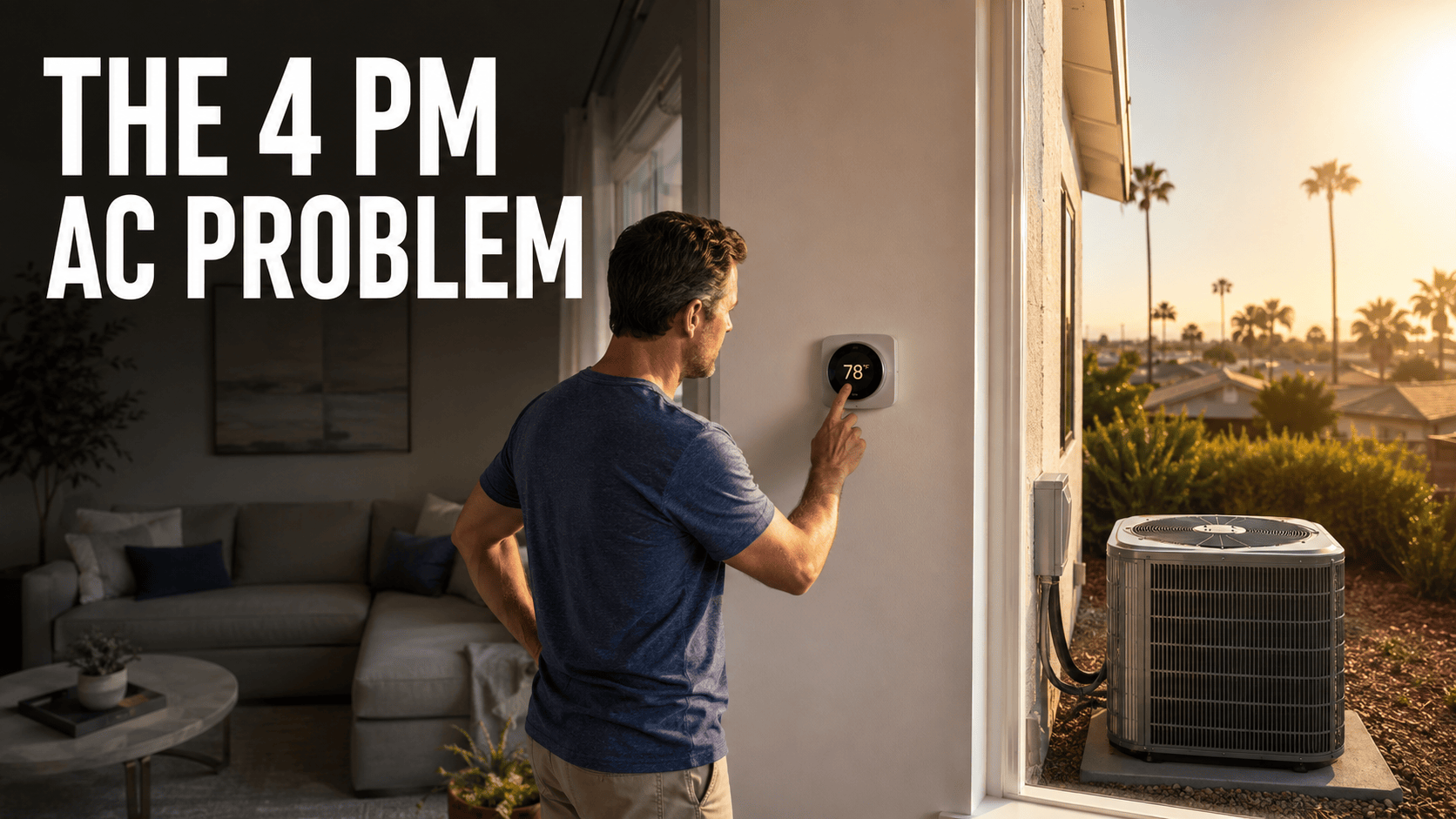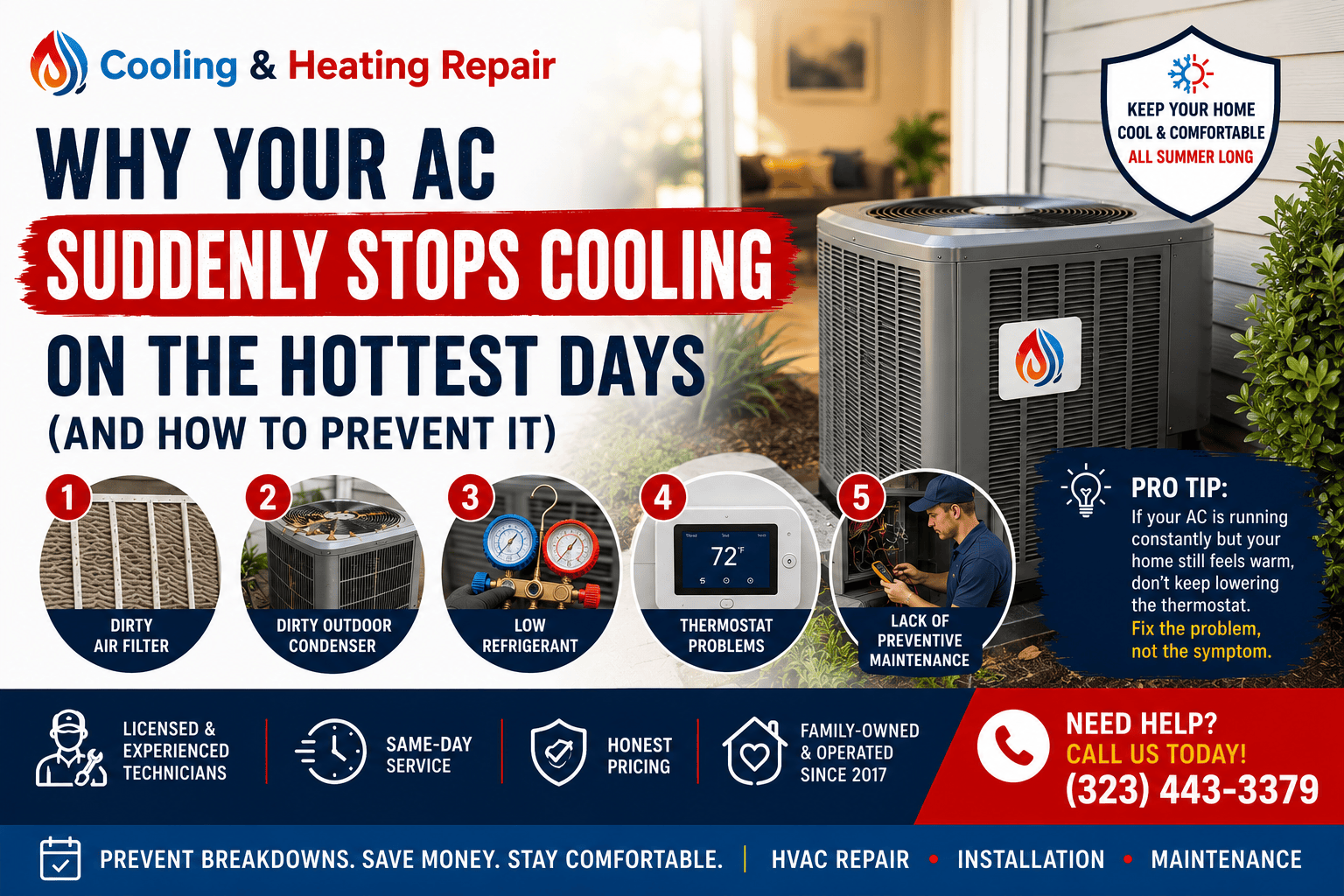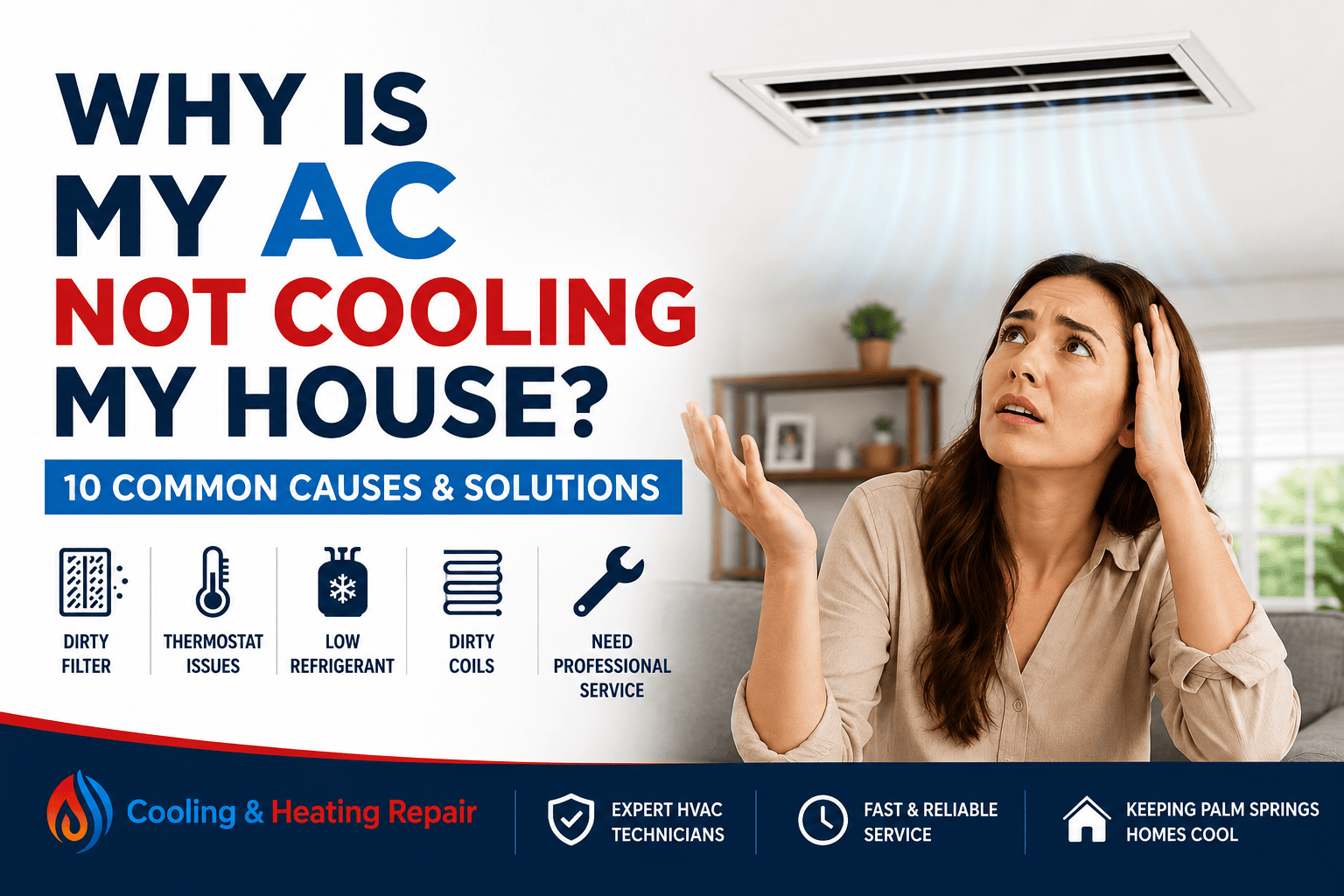
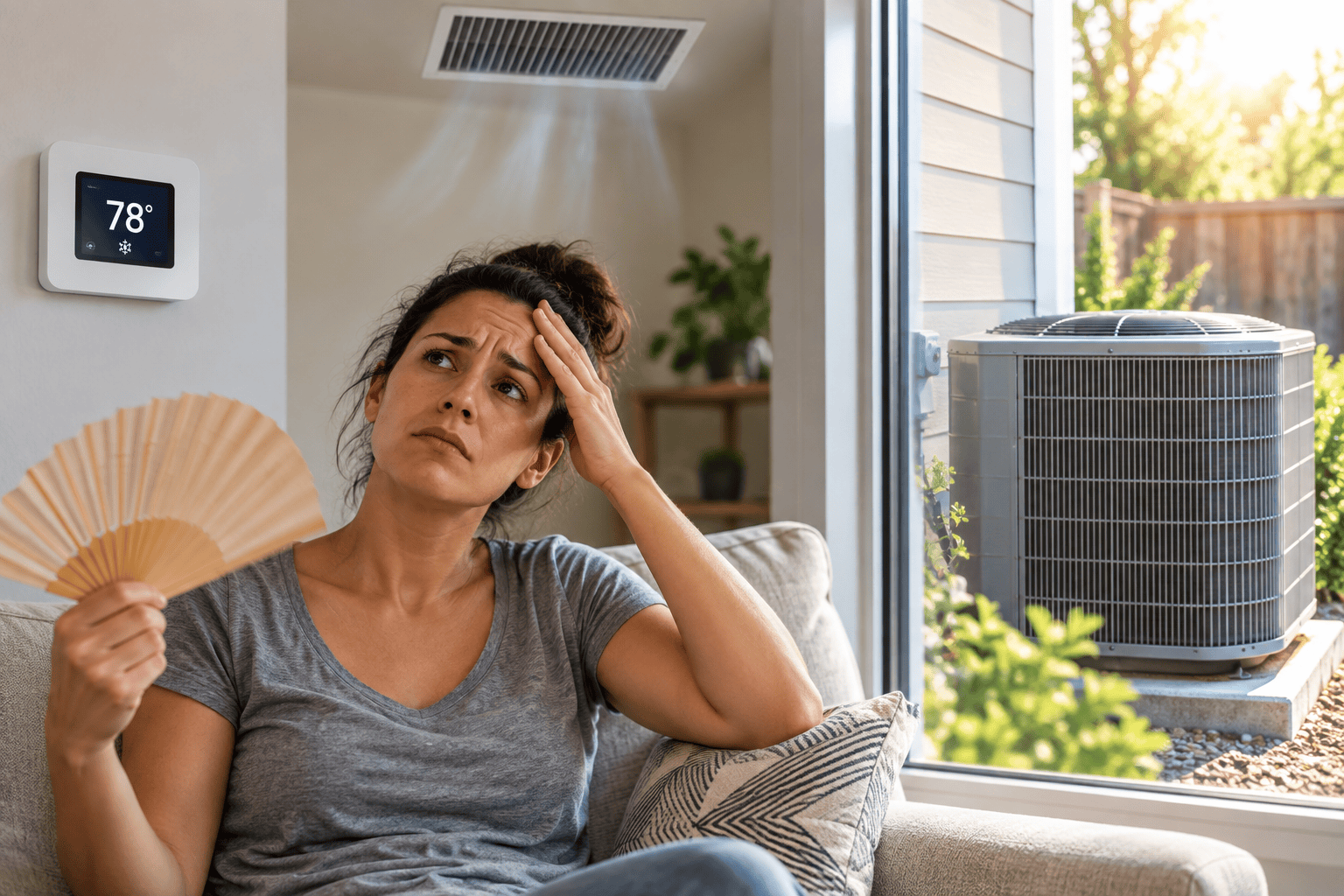
Your air conditioner is running. You can hear the system working, air is coming from the vents, and the thermostat appears to be functioning normally. Yet the temperature inside your home barely changes.
This is one of the more confusing central AC problems because the system may look like it is working when, in reality, it is struggling to remove enough heat from your home.
Understanding what is happening can help you determine whether you are dealing with a simple airflow issue or a problem that requires professional AC repair.
First, Check the Air Coming From Your Vents
Start with a simple test.
While your AC is running, place your hand near one of the supply vents. The air should feel noticeably cooler than the room.
If the airflow feels strong but the air itself is only slightly cool or almost room temperature, the problem may be related to the refrigeration or outdoor portion of the system.
If the air feels cold but very little of it is coming through the vents, the issue is more likely related to airflow.
That distinction can provide an important clue.
A Dirty Air Filter Can Reduce Cooling More Than You Think
Your central AC needs to move a large volume of indoor air across the evaporator coil.
When the air filter becomes heavily clogged, the blower has to work against additional resistance. Less air reaches the coil, less conditioned air returns to the rooms, and the system may run much longer trying to reach the thermostat setting.
In severe cases, restricted airflow can contribute to the evaporator coil becoming excessively cold and eventually freezing.
If you haven’t checked your filter recently, this is one of the safest things you can inspect yourself.
However, replacing the filter won’t necessarily solve the problem if ice has already formed or another mechanical issue caused the poor airflow.
Check Whether the Outdoor AC Unit Is Actually Running
A central air conditioning system typically has both indoor and outdoor components.
It is possible for the indoor blower to continue moving air even when the outdoor unit is not operating correctly.
This creates a situation that can be misleading: you hear the AC running and feel air from the vents, but the house isn’t getting colder.
While the system is calling for cooling, look at the outdoor unit from a safe distance.
Is it running normally? Does it repeatedly start and stop? Is there an unusual buzzing sound? Is the fan stationary while the system appears to be trying to operate?
Do not remove panels or attempt electrical repairs yourself. The outdoor unit contains high-voltage components even when the problem appears minor.
Your AC May Be Running Without Removing Enough Heat
Air conditioners don’t actually “create cold.” They transfer heat from inside your home to the outdoors.
Refrigerant circulating through the system makes that process possible.
If the system develops a refrigerant-related problem, cooling capacity can decrease substantially. The AC may continue running for long periods because the thermostat keeps requesting more cooling.
Possible symptoms can include:
- air that isn’t as cold as usual;
- unusually long cooling cycles;
- difficulty reaching the thermostat setting;
- ice forming on refrigerant lines or the indoor coil;
- cooling performance becoming progressively worse.
Simply adding refrigerant is not always the correct solution. A properly operating sealed system shouldn’t routinely require refrigerant to be added. If the charge is low, the underlying cause should be identified.
A Frozen Evaporator Coil Can Make the Problem Worse
Ice inside an air conditioner sounds like it should make the air colder.
In practice, the opposite happens.
When ice forms on the evaporator coil, it creates a barrier that restricts both airflow and heat transfer. As more ice accumulates, cooling performance can continue to deteriorate.
A frozen coil can be associated with restricted airflow, blower problems, refrigerant issues, or other system conditions.
If you notice ice on accessible refrigerant lines or suspect the indoor coil is frozen, continuing to run the AC can make the situation worse.
Turn cooling off and arrange for the cause to be diagnosed rather than repeatedly restarting the system.
Don’t Ignore the Temperature Outside
Extremely hot weather places significantly more demand on an air conditioning system.
On a mild day, an AC with a developing problem may appear to operate normally. During a heat wave, that same system may run almost continuously and still struggle to maintain the desired indoor temperature.
This doesn’t automatically mean the AC is broken.
The important question is whether its performance has changed.
If your system previously maintained a comfortable temperature during similar weather but suddenly cannot, that change deserves attention.
Your Thermostat Setting Doesn’t Control How Cold the Air Becomes
A common misconception is that lowering the thermostat from 74°F to 65°F will make the AC blow colder air.
Usually, it doesn’t.
The thermostat primarily tells the system when cooling is needed and when to stop. Setting an extremely low temperature generally causes the AC to run longer; it doesn’t make a normally operating central system cool faster.
If your home is 82°F and the system cannot bring the temperature down, lowering the thermostat another ten degrees is unlikely to solve the underlying problem.
When Should You Call an AC Technician?
Consider professional diagnosis when your central AC is running but you notice a significant loss of cooling, weak airflow, unusual noises, repeated cycling, ice formation, or an outdoor unit that isn’t operating normally.
A technician can evaluate the system as a whole rather than guessing based on one symptom.
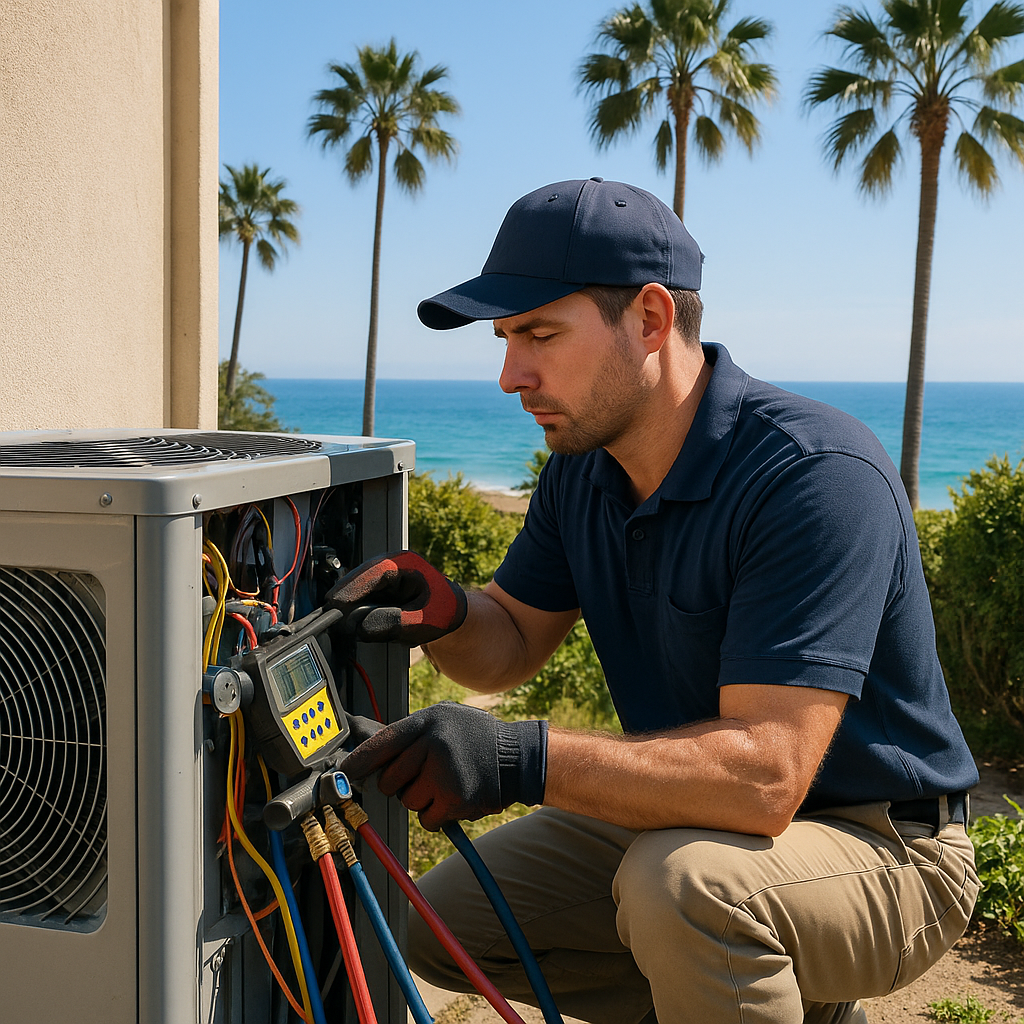
That may include checking airflow, electrical components, operating temperatures and pressures, the indoor and outdoor equipment, and other conditions affecting cooling performance.
The goal should be to identify why the system isn’t cooling properly before recommending a repair.
The Bottom Line
An AC that runs continuously isn’t necessarily an AC that is cooling correctly.
Poor airflow, a clogged filter, a frozen evaporator coil, an outdoor-unit problem, electrical issues, or a refrigeration problem can all produce similar symptoms from inside the house.
Start with the simple things you can safely check: the thermostat, filter, airflow from the vents, and whether the outdoor unit appears to be operating.
If your central AC is still running without bringing the temperature down, professional diagnosis can prevent a smaller problem from turning into a more expensive repair.
Cooling & Heating Repair provides professional central AC diagnostics and repair. If your air conditioner is running but your home isn’t getting comfortable, our technicians can inspect the system, explain what is causing the problem, and recommend the appropriate repair.